
A nursery nurse is performing a shift assessment on a baby who was born 8 hours ago via a vacuum-assisted vaginal birth and notices caput succedaneum. Which of the following statements regarding caput succedaneum is correct?
"Caput succedaneum is a concern and I need to call the pediatrician right away."
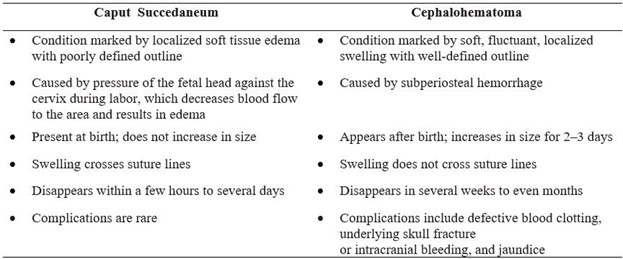
"Caput succedaneum is self-limiting and goes away on its own within 3-5 days.
Caput succedaneum is caused by the cranial bones changing shape to get through the maternal pelvis.
"Caput succedaneum is bleeding on the brain that does not cross the suture line."
The Correct Answer is B
Caput succedaneum is a common condition in newborns that causes swelling of the soft tissues of the scalp. It is usually caused by pressure on the baby's head during delivery and can be seen in both vaginal and instrumental births, such as vacuum-assisted deliveries. It generally crosses the suture lines, unlike a cephalohematoma.
Caput succedaneum is not a serious condition and generally resolves on its own within a few days without any treatment. However, the nurse should continue to monitor the newborn for signs of jaundice, which can occur due to the breakdown of red blood cells in the swelling.
Nursing Test Bank
Naxlex Comprehensive Predictor Exams
Related Questions
Correct Answer is D
Explanation
Perineal hematoma is a complication that can occur after vaginal births, typically due to trauma or injury to the perineum during delivery. Wound dehiscence, UTIs, and DVTs are all possible complications associated with cesarean births. Wound dehiscence is a separation of the layers of the surgical incision, UTIs can occur due to catheterization during the surgery, and DVTs can occur due to immobility during the recovery period.
Correct Answer is C
Explanation
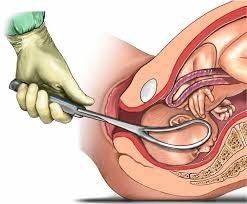
After a forceps-assisted birth, the infant should be assessed for signs of trauma or injury, such as bruising, facial nerve injury, or skull fractures. This assessment should be done immediately after the birth to ensure prompt recognition and management of any issues.
Option A is incorrect because measuring the circumference of the infant's head can be done after the assessment for trauma has been completed and any issues have been addressed.
Option B is incorrect because applying a cold pack to the infant's scalp is not a standard nursing intervention after a forceps-assisted birth.
Option D is incorrect because prophylactic antibiotics are not routinely administered to infants after a forceps-assisted birth unless there is a specific indication, such as suspected infection.
Whether you are a student looking to ace your exams or a practicing nurse seeking to enhance your expertise , our nursing education contents will empower you with the confidence and competence to make a difference in the lives of patients and become a respected leader in the healthcare field.
Visit Naxlex, invest in your future and unlock endless possibilities with our unparalleled nursing education contents today