
A nurse on an oncology unit is caring for a client who is receiving internal radiation therapy. Which of the following actions should the nurse take?
Wear a lead apron when providing client care.
Allow visitors to hold the client's hand.
Leave the door to the client's room open.
Place the dosimeter him badge on the client's do
The Correct Answer is A
Choice A Reason:
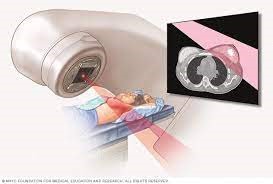
Wearing a lead apron when providing client care is appropriate. When caring for a client who is receiving internal radiation therapy, the nurse should take appropriate safety measures to minimize their exposure to radiation. Wearing a lead apron when providing care to the client helps shield the nurse's body from radiation exposure and reduces the risk of harm.
Choice B Reason:
Allowing visitors to hold the client's hand is inappropriate. Visitors should also be educated about radiation safety measures and should not be encouraged to have close contact with the client during internal radiation therapy.
Choice C Reason:
Leaving the door to the client's room open is inappropriate. Closing the door to the client's room can help contain radiation and limit its spread to other areas.
Choice D Reason:
Placing the dosimeter badge on the client's bed is inappropriate. The dosimeter badge should be worn by healthcare personnel to measure their radiation exposure. Placing it on the client's bed does not accurately measure the nurse's exposure and is not the correct use of the badge.
Nursing Test Bank
Naxlex Comprehensive Predictor Exams
Related Questions
Correct Answer is A
Explanation
A. Inability to exhale retained carbon dioxide: During an acute asthma attack, airway obstruction due to bronchospasm, inflammation, and increased mucus production leads to air trapping. This makes it difficult for the client to fully exhale, resulting in the retention of carbon dioxide. Hyperinflation of the lungs and respiratory acidosis can occur as a result, contributing to the client's manifestations.
B. Acute loss of alveolar elasticity: A loss of alveolar elasticity is associated with conditions like emphysema, not asthma. Asthma primarily affects the airways rather than the alveoli, and elasticity is not typically impacted during an acute asthma attack.
C. Decreased responsiveness of airways to allergens: Asthma is characterized by increased responsiveness of the airways to triggers such as allergens, not decreased responsiveness. This hyperresponsiveness is a hallmark of the condition and contributes to airway narrowing during an attack.
D. Suppressed bronchiolar inflammatory response: Asthma attacks involve heightened inflammation of the bronchioles, not a suppressed inflammatory response. The inflammation contributes to airway swelling, increased mucus production, and bronchospasm.
Correct Answer is B
Explanation
Choice A reason:
Listening to the client's bowel sounds should not be implemented. While assessing bowel sounds is important, it is not the highest priority in this situation. The client's low serum potassium level indicates the potential for serious cardiac arrhythmias, so actions related to monitoring and addressing this electrolyte imbalance are more critical.
Choice B reason:
Initiate cardiac monitoring for the client is the correct answer. A serum potassium level of 2.8 mEq/L is significantly low and can lead to life-threatening cardiac arrhythmias. Initiating cardiac monitoring is crucial to assess the client's heart rhythm and ensure that any potential abnormalities are identified promptly.
Choice C reason:
Check the client's hand grasps should not be implemented. Assessing the client's hand grasps can provide information about muscle strength, but it is not the immediate priority when the client has a critically low potassium level.
Choice D reason:
Administer an IV potassium drip should not be implemented. Administering IV potassium is important for correcting the potassium imbalance, but the priority is to assess and monitor the client's cardiac status first. Rapid administration of potassium can lead to cardiac arrhythmias, so it's important to ensure the heart's stability through cardiac monitoring before administering potassium.
Whether you are a student looking to ace your exams or a practicing nurse seeking to enhance your expertise , our nursing education contents will empower you with the confidence and competence to make a difference in the lives of patients and become a respected leader in the healthcare field.
Visit Naxlex, invest in your future and unlock endless possibilities with our unparalleled nursing education contents today