
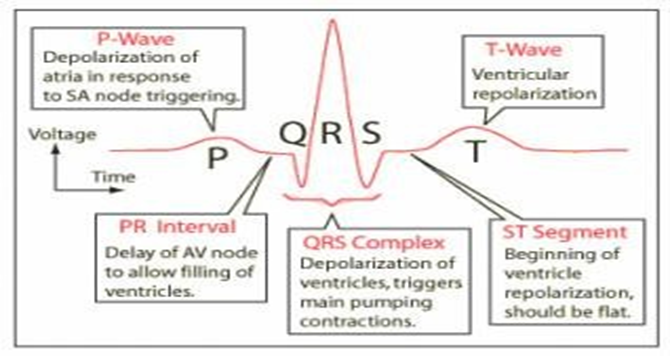
A nurse is teaching a newly licensed nurse about evaluating a cardiac rhythm. Which of the following options should the nurse identify as the P wave in the ECG complex? (You will find hot spots to select in the artwork below. Select only the hot spot that corresponds to your answer.)
The Correct Answer is "{\"xRanges\":[56.64581298828125,96.64581298828125],\"yRanges\":[110.33331298828125,150.33331298828125]}"
Nursing Test Bank
Naxlex Comprehensive Predictor Exams
Related Questions
Correct Answer is C
Explanation
A. This is the action of medications like anticholinergics, not lidocaine.
B. Lidocaine does have local anesthetic properties, but it's not used in this context to relieve pain. It's used for its anti-arrhythmic properties.
C. Lidocaine is a class IB anti-arrhythmic medication. It suppresses abnormal heart rhythms, making it a crucial drug in treating cardiac arrest.
D. This is the action of thrombolytic medications like tissue plasminogen activator (tPA), not lidocaine.
Correct Answer is A
Explanation
A. Elevating the head of the bed is a cornerstone of managing increased intracranial pressure (ICP). Elevating the head of the bed to 30 degrees promotes venous drainage from the brain, helping to reduce ICP.
B. A brightly lit environment can stimulate the patient and increase ICP. A calm, dark environment is preferred.
C. Fluid restriction, not encouragement, is often necessary to manage ICP. Excessive fluid can increase intracranial volume.
D. Controlled coughing and deep breathing are important for lung expansion but coughing and straining can increase ICP. Gentle breathing exercises are preferred.
Whether you are a student looking to ace your exams or a practicing nurse seeking to enhance your expertise , our nursing education contents will empower you with the confidence and competence to make a difference in the lives of patients and become a respected leader in the healthcare field.
Visit Naxlex, invest in your future and unlock endless possibilities with our unparalleled nursing education contents today