
A nurse is teaching a client's partner how to administer an optic medication to the client. Which of the following statements by the client's partner indicates an understanding of the teaching?
"I will have my partner tilt their head back while I am instilling the drops."
"I will make sure the solution is cool prior to instilling the drops."
"I will pull the pinna upward and outward prior to instilling the drops."
"I will have my partner lie down on their back while I am instilling the drops."
The Correct Answer is C
Choice A Reason:
"I will have my partner tilt their head back while I am instilling the drops." Is incorrect. Tilting the head back is not typically recommended for administering optic medication as it might cause the medication to flow out instead of remaining in the ear canal.
Choice B Reason:
"I will make sure the solution is cool prior to instilling the drops." Is incorrect. The temperature of the solution usually doesn't need to be adjusted before instilling optic drops unless directed otherwise by specific medication instructions or healthcare provider guidance.
Choice C Reason:
"I will pull the pinna upward and outward prior to instilling the drops." Is correct statement. Pulling the pinna (outer ear) upward and outward helps straighten the ear canal in adults, facilitating the proper administration of optic (ear) drops. This action helps ensure that the medication reaches the ear canal effectively.
Choice D Reason:
"I will have my partner lie down on their back while I am instilling the drops." Is incorrect statement.
Having the partner lie down on their back might not be necessary for administering optic medication and might not be the optimal position for effective instillation.
Nursing Test Bank
Naxlex Comprehensive Predictor Exams
Related Questions
Correct Answer is C
Explanation
Choice A Reason:
INR (International Normalized Ratio) is incorrect. INR is a measurement used to monitor the effects of anticoagulants like warfarin. It assesses the blood's ability to clot. Filgrastim does not directly affect INR levels, so monitoring INR would not provide information about the effectiveness of filgrastim in stimulating white blood cell production.
Choice B Reason:
BUN (Blood Urea Nitrogen) is incorrect. BUN levels primarily indicate kidney function and hydration status. They are not directly influenced by filgrastim treatment. Monitoring BUN is essential for assessing kidney function but does not reflect the effectiveness of filgrastim therapy in increasing white blood cell counts.
Choice C Reason:
WBC count is correct. Filgrastim is a medication that stimulates the production of white blood cells (WBCs), particularly neutrophils. Therefore, the key laboratory value to monitor for assessing the effectiveness of filgrastim therapy is the WBC count. An increase in the WBC count, particularly in the neutrophil count, signifies the intended therapeutic effect of filgrastim in boosting the immune system's response by increasing the production of these infection-fighting cells.
Choice D Reason:
Potassium level is incorrect. Potassium levels are crucial for heart and muscle function. While certain medications might affect potassium levels, filgrastim's primary action is on stimulating white blood cell production and does not directly impact potassium levels. Monitoring potassium levels is essential for overall health but does not specifically indicate the effectiveness of filgrastim treatment.

Correct Answer is C
Explanation
Choice A Reason:
Weight gain of 0.7 kg (1.5 lb) in 24 hours is not recommendable. While sudden weight gain can indicate fluid retention, it is not a direct contraindication for administering digoxin. However, it might indicate worsening heart failure, which needs attention, but it doesn't specifically necessitate withholding digoxin.
Choice B Reason:
Urinary output 30 mL/hr is not recommendable. A low urinary output might indicate decreased kidney perfusion or renal issues. While monitoring urinary output is important, it is not a direct reason to withhold digoxin unless it's coupled with severe renal impairment or an acute kidney injury.
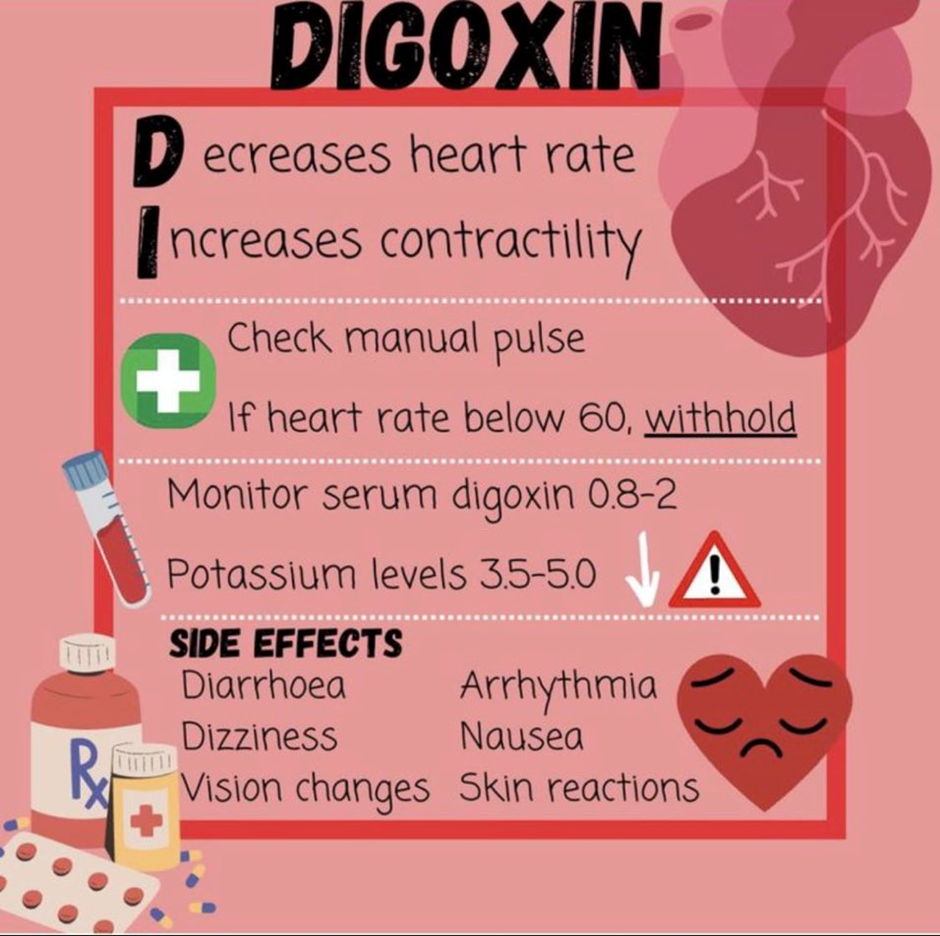
For a client receiving digoxin, certain findings would warrant withholding the medication due to potential complications. Among the options provided:
Choice C Reason:
Pulse rate 56/min is the correct recommendation. A low pulse rate (bradycardia), especially below 60 beats per minute, is a reason to withhold digoxin. Digoxin can further decrease the heart rate, potentially leading to excessive bradycardia or heart block. The nurse should hold the medication and consult with the healthcare provider to determine the appropriate action.
Choice D Reason:
BP 160/90 mm Hg is not recommendable. Elevated blood pressure alone is not a direct contraindication for administering digoxin to a patient with heart failure. Digoxin is not primarily used for controlling blood pressure; its use is more focused on managing heart rate and contractility in heart failure patients.
Whether you are a student looking to ace your exams or a practicing nurse seeking to enhance your expertise , our nursing education contents will empower you with the confidence and competence to make a difference in the lives of patients and become a respected leader in the healthcare field.
Visit Naxlex, invest in your future and unlock endless possibilities with our unparalleled nursing education contents today