
A nurse is teaching a client who has active pulmonary tuberculosis about management of medication for the disease.
Which of the following statements is appropriate for the nurse to make?
"You should report monthly to have your blood drawn to monitor kidney function while taking medication.”
"You will need to undergo tuberculin skin tests every 6 months while taking medication for your disease.”
"You will need to take two or more medications to treat your disease.”
"You should anticipate taking medication to treat your disease for at least the next 3 years.”
The Correct Answer is C
The nurse should inform the client that they will need to take two or more medications to treat their disease [C].
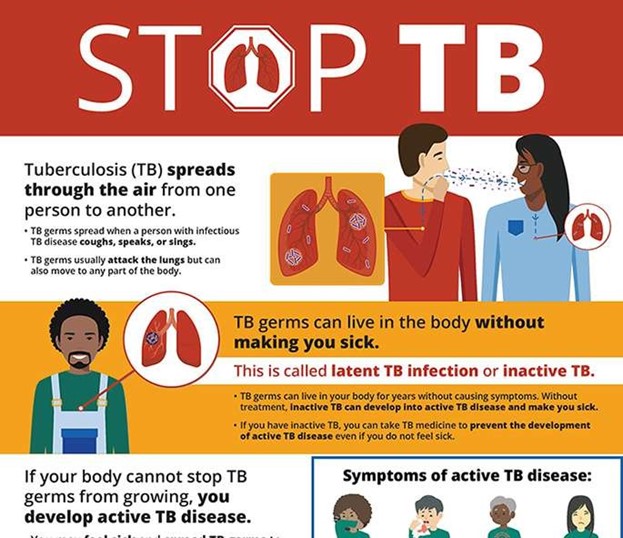
The treatment of active pulmonary tuberculosis typically involves a combination of several antibiotics for a period of 6 to 12 months.
Choice A is wrong because monitoring kidney function is not typically necessary while taking medication for tuberculosis [A].
Choice B is wrong because tuberculin skin tests are not necessary every 6 months while taking medication for tuberculosis [B].
Choice D is wrong because the duration of treatment for active pulmonary tuberculosis is typically 6 to 12 months, not 3 years [D].
Nursing Test Bank
Naxlex Comprehensive Predictor Exams
Related Questions
Correct Answer is D
Explanation
Improved cognition should indicate to the nurse that the treatment with a hypertonic solution for hyponatremia is effective.
Hyponatremia can cause confusion and other neurological symptoms, so an improvement in cognition would suggest that the treatment is working to correct the electrolyte imbalance.
Choice A is wrong because Chvostek’s sign is a clinical sign of hypocalcemia, not hyponatremia.
Choice B is wrong because while vomiting can be a symptom of hyponatremia, a decrease in vomiting alone does not necessarily indicate that the treatment is effective.
Choice C is wrong because while hyponatremia can cause cardiac arrhythmias, the absence of arrhythmias alone does not necessarily indicate that the treatment is effective.
Correct Answer is A
Explanation
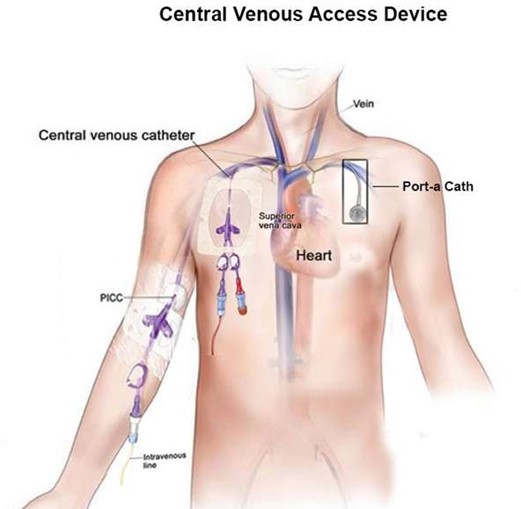
Total parenteral nutrition (TPN) is a highly concentrated solution that provides nutrients to the body intravenously.
It is typically administered through a central venous access device, such as a central venous catheter or a peripherally inserted central catheter (PICC), because it can irritate the walls of smaller veins.
Choice B is wrong because Midline catheter, is not an appropriate route for TPN administration because it is not a central venous access device.
Choice C is wrong because Subcutaneous, is not an appropriate route for TPN administration because it is not given intravenously.
Choice D is wrong because Intraosseous, is not an appropriate route for TPN administration because it is typically used in emergency situations when intravenous access cannot be obtained.
Whether you are a student looking to ace your exams or a practicing nurse seeking to enhance your expertise , our nursing education contents will empower you with the confidence and competence to make a difference in the lives of patients and become a respected leader in the healthcare field.
Visit Naxlex, invest in your future and unlock endless possibilities with our unparalleled nursing education contents today