
A nurse is providing teaching about blood pressure measurement to a client who has hypertension. Which of the following instructions should the nurse include?
Use an electronic device.
Inflate the cuff to 140/90 mmHg.
Place the cuff on the upper arm.
Measure blood pressure after exercise.
The Correct Answer is C
Choice A reason: Using an electronic device is not a reliable method for measuring blood pressure because it may give inaccurate readings due to movement, noise, or battery issues. An electronic device should be calibrated regularly and compared with a manual device.
Choice B reason: Inflating the cuff to 140/90 mmHg is not a correct procedure for measuring blood pressure because it may cause discomfort and false readings. The cuff should be inflated to about 20 to 30 mmHg above the expected systolic pressure or until the pulse disappears.
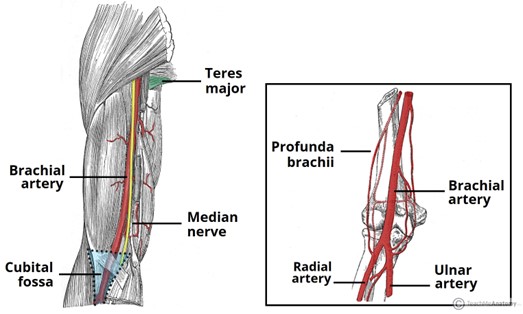
Choice C reason: Placing the cuff on the upper arm is a correct procedure for measuring blood pressure because it ensures that the cuff is at the same level as the heart and that the brachial artery is compressed. The cuff should be snug and fit around 80% of the arm circumference.
Choice D reason: Measuring blood pressure after exercise is not a good time for measuring blood pressure because it may reflect a temporary increase due to physical activity. Blood pressure should be measured after resting for at least 5 minutes in a quiet and comfortable environment.
Nursing Test Bank
Naxlex Comprehensive Predictor Exams
Related Questions
Correct Answer is D
Explanation
Choice A reason: Recommending a total fat intake of 12 g each day is not an appropriate action for the nurse to take because it is too low for most adults. The recommended dietary allowance (RDA. for fat is 20 to 35% of total calories per day, which translates to about 44 to 78 g of fat per day for an average adult who consumes 2,000 calories per day.
Choice B reason: Referring the client to a weight-loss support group is not an appropriate action for the nurse to take because the client does not need to lose weight. A body mass index (BMI) of 22 is within the normal range, which is 18.5 to 24.9. A weight-loss support group is more suitable for clients who have a BMI of 25 or higher, which indicates overweight or obesity.
Choice C reason: Advising the client to add 500 calories per day to the diet is not an appropriate action for the nurse to take because it may lead to weight gain. A client who has a BMI of 22 does not need to increase their caloric intake unless they have other medical conditions or nutritional needs that require more calories. Adding 500 calories per day to the diet can result in gaining about one pound per week, which can increase the risk of obesity and its complications.
Choice D reason: Encouraging the client to continue current daily caloric intake is an appropriate action for the nurse to take because it can help maintain a healthy weight. A client who has a BMI of 22 has a balanced energy intake and expenditure, which means that they consume enough calories to meet their metabolic needs and physical activity level. Continuing current daily caloric intake can prevent weight loss or gain and promote health and wellness.
Correct Answer is A
Explanation
Choice A reason: Tuna fish is a good food choice for an older adult client who has difficulty chewing due to missing teeth because it is soft, moist, and easy to swallow. Tuna fish also provides protein, omega-3 fatty acids, and vitamin D for the client.
Choice B reason: Roast beef is not a good food choice for an older adult client who has difficulty chewing due to missing teeth because it is tough, dry, and hard to chew. Roast beef can cause pain, fatigue, or choking for the client who has missing teeth. Roast beef should be avoided or cut into very small pieces and moistened with gravy or sauce before consuming.
Choice C reason: Apple slices are not a good food choice for an older adult client who has difficulty chewing due to missing teeth because they are crisp, firm, and sticky. Apple slices can cause irritation or injury to the gums or mouth or dislodge any remaining teeth. Apple slices should be avoided or cooked until soft and mashed before consuming.
Choice D reason: Dried fruit is not a good food choice for an older adult client who has difficulty chewing due to missing teeth because they are chewy, sticky, and sugary. Dried fruit can adhere to the gums or teeth and cause dental caries or gum disease. Dried fruit should be avoided or soaked in water until soft and cut into small pieces before consuming.
Whether you are a student looking to ace your exams or a practicing nurse seeking to enhance your expertise , our nursing education contents will empower you with the confidence and competence to make a difference in the lives of patients and become a respected leader in the healthcare field.
Visit Naxlex, invest in your future and unlock endless possibilities with our unparalleled nursing education contents today