
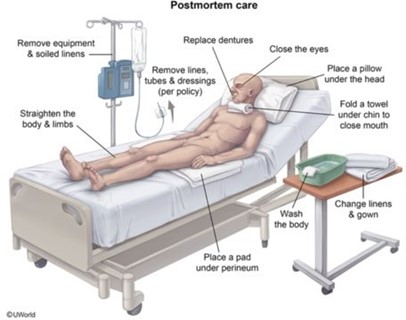
A nurse is providing postmortem care for a client prior to the family viewing the body. Which of the following actions should the nurse take?
Raise the head of the client's bed to 30 degrees.
Cleanse the client's body while wearing sterile gloves
Remove the client's dentures and close their mouth
Apply surgical tape to the client's eyes
The Correct Answer is A
After a patient dies, postmortem care includes preparing them for family viewing. The nurse should place the body in the supine position, with the arms at the sides and the head on a pillow. Then elevate the head of the bed 30 degrees to prevent discoloration from blood settling in the face .
The other options are not correct because:
b) The nurse should cleanse the client's body while wearing appropriate personal protective equipment (PPE) based on indications for isolation precautions, not necessarily sterile gloves.
c) If the patient wore dentures and your facility’s policy permits, gently insert them; then close the mouth
d) The nurse should close the eyes by gently pressing on the lids with their fingertips. If they don’t stay closed, place moist coton balls on the eyelids for a few minutes, and then try again to close them. Surgical tape is not mentioned as necessary .
Nursing Test Bank
Naxlex Comprehensive Predictor Exams
Related Questions
Correct Answer is C
Explanation
The correct answer and explanation is:
c. Denial
The nurse should identify that the client is experiencing the stage of denial in the grief process. Denial is a common psychological defense mechanism that individuals may exhibit when faced with a stressful or overwhelming situation, such as the prospect of open heart surgery. It involves a refusal to accept or acknowledge the reality of the situation. In this case, the client's statement of being confident to go home shortly after surgery demonstrates a denial of the potential challenges and recovery process associated with such a procedure.
Explanation for the other options:
A . Anger: Anger is a stage of grief characterized by feelings of resentment, frustration, and hostility. It is common for individuals to experience anger as part of the grief process, but the client's statement does not indicate anger.
B. Depression: Depression is another stage of grief marked by feelings of sadness, hopelessness, and loss. While it is normal for individuals to experience some level of anxiety or sadness before undergoing surgery, the client's statement does not specifically reflect depression.
d. Acceptance: Acceptance is the final stage of grief, where individuals come to terms with their situation and find a sense of peace or resolution. The client's statement indicates a lack of acceptance as they are denying the potential impact of the surgery and its recovery process.

Correct Answer is B
Explanation
b. A client who has hemiparesis and lives alone.
Explanation:
The correct answer is b. A client who has hemiparesis and lives alone.
An interdisciplinary care conference involves the collaboration of multiple healthcare professionals from different disciplines to develop a comprehensive care plan for a client. In this scenario, the client with hemiparesis who lives alone requires an interdisciplinary care conference because their condition and living situation present complex challenges.
Clients who had surgery for cataract removal and live in a rural location (option a) may require support with transportation and follow-up appointments, but it does not necessarily warrant an interdisciplinary care conference.
A client who requires assistance to pay for dressing supplies (option c) may benefit from financial counseling or resources, but it does not typically require the involvement of multiple healthcare professionals in a care conference.
A client who requires instruction regarding medication administration (option d) can typically receive education from a nurse or pharmacist without the need for an interdisciplinary care conference.
In contrast, the client with hemiparesis who lives alone may require input from various professionals such as physical therapists, occupational therapists, social workers, and home healthcare providers to address their physical limitations, safety concerns, and support needs. Therefore, an interdisciplinary care conference is necessary to develop a comprehensive discharge plan that addresses all aspects of their care and promotes their well-being in the community.
Whether you are a student looking to ace your exams or a practicing nurse seeking to enhance your expertise , our nursing education contents will empower you with the confidence and competence to make a difference in the lives of patients and become a respected leader in the healthcare field.
Visit Naxlex, invest in your future and unlock endless possibilities with our unparalleled nursing education contents today
Report Wrong Answer on the Current Question
Do you disagree with the answer? If yes, what is your expected answer? Explain.
Kindly be descriptive with the issue you are facing.
