
A nurse is providing discharge teaching to a client who has borderline personality disorder. The client reports being a single parent caring for two toddlers. Which of the following actions should the nurse take?
Offer the client information about a support group for parents.
Suggest the children live with other relatives.
Notify child protective services.
Encourage the children to visit the psychiatric unit when the client is leaving.
The Correct Answer is A
A Offering information about support groups for parents can provide the client with access to peer support, education, and resources to help them navigate the challenges of parenting while dealing with their mental health condition. This approach supports the client's autonomy and emphasizes a strengths-based perspective, promoting resilience and well-being for both the client and their children.
B. This option may not be appropriate without further assessment of the client's ability to care for their children.
C. This option should be considered only if there are significant concerns about the safety and welfare of the children, such as neglect or abuse, which cannot be addressed through other means.
D. Encouraging the children to visit the psychiatric unit may not be appropriate, as it may be overwhelming or distressing for them.
Nursing Test Bank
Naxlex Comprehensive Predictor Exams
Related Questions
Correct Answer is B
Explanation
B. This concept involves understanding how individuals respond to stressors and whether their coping strategies are effective in managing stress and promoting well-being. By assessing whether the client's responses to stress are adaptive (i.e., helpful and constructive) or maladaptive (i.e., harmful or ineffective), the nurse can tailor interventions to support the client in developing healthier coping mechanisms and managing stress more effectively.
A. Although understanding the client's perception of the stressors is important, labeling them as justified or unjustified may not fully capture the complexity of the client's experience or their individual response to stress.
C This concept involves evaluating the moral or ethical implications of the client's actions or decisions in response to stressors.
D. While assessing the client's behaviors and their impact on health and well-being is important, labeling them as inherently good or bad may oversimplify the complexity of the client's experience.
Correct Answer is D
Explanation
D. Hallucinations, particularly visual hallucinations, are a common manifestation of alcohol withdrawal, typically occurring within 12 to 24 hours after the last drink. These hallucinations can be vivid and may involve seeing objects, people, or animals that are not actually present.
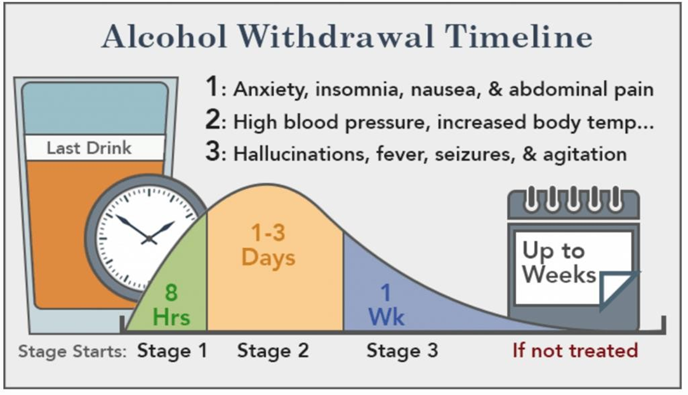
A. Hypertension (high blood pressure) is more commonly associated with alcohol withdrawal, especially during the acute phase.
B. Respiratory depression, characterized by slowed or shallow breathing, is not a typical feature of alcohol withdrawal.
C. Muscle aches are not typically associated with alcohol withdrawal. Instead, symptoms such as tremors, agitation, and insomnia are more common during alcohol withdrawal.
Whether you are a student looking to ace your exams or a practicing nurse seeking to enhance your expertise , our nursing education contents will empower you with the confidence and competence to make a difference in the lives of patients and become a respected leader in the healthcare field.
Visit Naxlex, invest in your future and unlock endless possibilities with our unparalleled nursing education contents today