
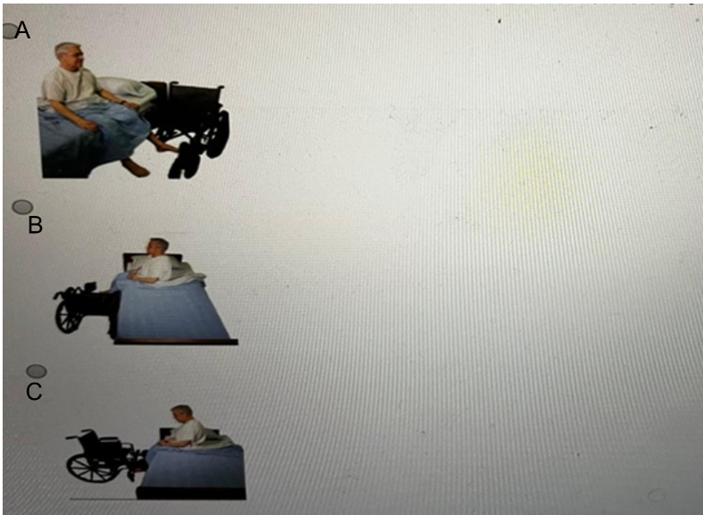
A nurse is preparing to assist a client out of bed to a wheelchair following left knee surgery. The nurse should identify that which of the following images indicates the correct placement of the wheelchair?
A
B
B
The Correct Answer is C
A. Wheelchair is on the left side, which is the postoperative knee, risking strain or injury to the healing limb during transfer. Not ideal for maximizing client safety and independence in mobility.
B: Wheelchair is placed at the head of the bed, making it impractical and unsafe for transfer. No clear pivot point, and body mechanics would be compromised for both the nurse and the client.
C. The wheelchair is positioned on the client's right side, which is the unaffected leg, allowing the client to pivot and transfer using their stronger limb. This placement minimizes strain on the left surgical knee, which reduces pain and risk of injury.
Nursing Test Bank
Naxlex Comprehensive Predictor Exams
Related Questions
Correct Answer is ["A","D"]
Explanation
A. Prick the side of the client's finger: Pricking the side (lateral aspect) of the fingertip reduces discomfort and provides good blood flow compared to the center of the finger, making it the preferred site for capillary blood sampling.
B. Squeeze the client’s finger until a blood drop forms: Squeezing or "milking" the finger vigorously after the prick can cause hemolysis (rupture of red blood cells) and dilute the specimen with interstitial fluid. This can lead to inaccurate results.
C. Elevate the client’s hand above the level of the heart: Elevating the hand above heart level can reduce blood flow to the finger, making it harder to obtain an adequate sample. The hand should be positioned at or slightly below heart level.
D. Apply clean gloves: Wearing clean gloves protects both the client and nurse from exposure to bloodborne pathogens and maintains infection control standards.
E. Cleanse the client’s finger with an iodine swab: Iodine is not typically used for capillary puncture site cleansing due to potential skin irritation and interference with some tests. An alcohol swab is preferred for cleaning before puncture.
Correct Answer is B
Explanation
A. "I should stop receiving Papanicolaou tests once I reach menopause”: Discontinuing Pap tests solely based on menopause is not recommended. Screening continues until at least age 65, depending on the individual's health history and prior screening results. Regular cervical cancer screening is important for early detection, even after menstruation stops.
B. "I might have headaches due to a decline in my estrogen levels”: Fluctuating and declining estrogen levels during perimenopause can trigger headaches or worsen existing ones. Hormonal changes affect blood vessels and neurotransmitters, contributing to the development of migraines or tension headaches in many women during this stage.
C. "The best time to perform a breast self-examination is on the first day of my period”: The ideal time is 7 to 10 days after the start of the menstrual period, when hormonal influence on breast tissue is minimal. Performing it on the first day of menstruation may result in increased tenderness and swelling, making it harder to detect abnormalities.
D. "I can expect to have regular periods until I am in menopause.": Perimenopause is typically marked by irregular menstrual cycles due to hormonal shifts. Periods may become lighter, heavier, more or less frequent before stopping altogether.
Whether you are a student looking to ace your exams or a practicing nurse seeking to enhance your expertise , our nursing education contents will empower you with the confidence and competence to make a difference in the lives of patients and become a respected leader in the healthcare field.
Visit Naxlex, invest in your future and unlock endless possibilities with our unparalleled nursing education contents today