
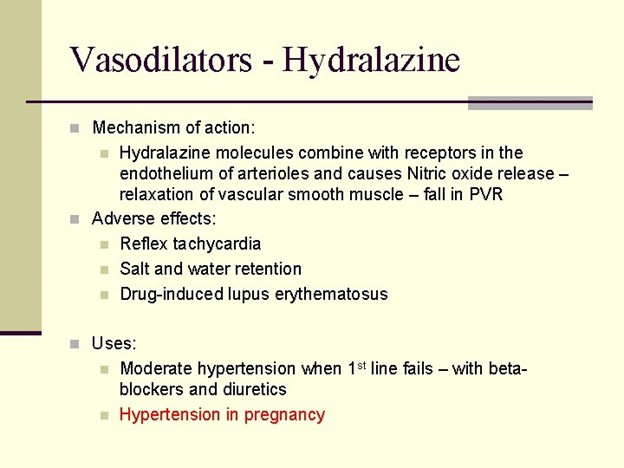
A nurse is preparing to administer hydralazine to a client with pre-eclampsia who has a blood pressure of 180/110 mmHg.
What is the rationale for using this medication?
It reduces cerebral edema and prevents seizures
It increases uteroplacental perfusion and fetal oxygenation
It decreases proteinuria and prevents renal damage
It relaxes smooth muscle and lowers blood pressure
The Correct Answer is D
This is the rationale for using this medication in a client with pre-eclampsia who has a blood pressure of 180/110 mmHg. High blood pressure in pre-eclampsia can cause damage to the kidneys, liver, brain, and other organs, and can also increase the risk of complications for the baby.
Therefore, lowering blood pressure with hydralazine can help prevent or reduce these adverse outcomes.
Choice A is wrong because hydralazine does not reduce cerebral edema or prevent seizures. These are symptoms of eclampsia, a more severe form of pre-eclampsia that requires different treatment.
Choice B is wrong because hydralazine does not increase uteroplacental perfusion or fetal oxygenation. These are affected by other factors such as the placental function, maternal position, and fetal well-being.
Choice C is wrong because hydralazine does not decrease proteinuria or prevent renal damage.
Proteinuria is a sign of kidney impairment that occurs in pre-eclampsia, but it is not directly affected by hydralazine. Renal damage can be prevented by controlling blood pressure and avoiding nephrotoxic drugs.
Nursing Test Bank
Naxlex Comprehensive Predictor Exams
Related Questions
Correct Answer is A
Explanation
Report any headache that is not relieved by acetaminophen.This is because a headache that persists despite taking pain medication can be a sign of increased blood pressure or brain swelling, which are serious complications of preeclampsia.
Choice B is wrong because some vaginal bleeding for up to 6 weeks postpartum is normal and expected for any woman who has given birth, regardless of whether she had preeclampsia or not.
Choice C is wrong because resuming sexual activity as soon as you feel comfortable is also a normal recommendation for any woman who has given birth, unless there are other medical reasons to avoid it.
Choice D is wrong because drinking at least 3 liters of fluid per day to prevent dehydration is not necessary for a woman who had preeclampsia.In fact, drinking too much fluid can worsen the swelling and fluid retention that are common in preeclampsia.
Correct Answer is A
Explanation
This is because HELLP syndrome is a complication of pregnancy that affects the liver and blood clotting.It can cause liver damage, bleeding problems, and high blood pressure.Epigastric pain or right upper quadrant pain is a sign of liver injury or rupture.
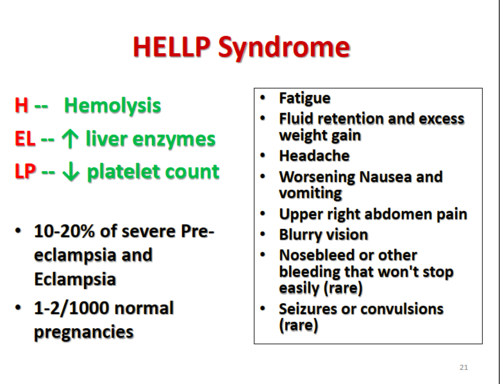
Choice B is wrong because blurred vision or flashes of light are symptoms of preeclampsia, not HELLP syndrome.
Preeclampsia is a condition that causes high blood pressure and protein in the urine during pregnancy.It can lead to HELLP syndrome, but not all women with preeclampsia develop HELLP syndrome.
Choice C is wrong because decreased urinary output or oliguria are also symptoms of preeclampsia, not HELLP syndrome.
Oliguria means producing less than 400 mL of urine in 24 hours.It can indicate kidney damage or failure due to high blood pressure or proteinuria.
Choice D is wrong because hyperreflexia or clonus are also symptoms of preeclampsia, not HELLP syndrome.
Hyperreflexia means having exaggerated reflexes, while clonus means having involuntary muscle spasms.
They can indicate nervous system involvement or seizures due to high
Whether you are a student looking to ace your exams or a practicing nurse seeking to enhance your expertise , our nursing education contents will empower you with the confidence and competence to make a difference in the lives of patients and become a respected leader in the healthcare field.
Visit Naxlex, invest in your future and unlock endless possibilities with our unparalleled nursing education contents today