
A nurse is planning care for a newborn who is scheduled to start phototherapy using a lamp.
Which of the following actions should the nurse include in the plan?
Give the newborn 1 oz of glucose water every 4 hr.
Dress the newborn in a thin layer of clothing during therapy.
Ensure the newborn's eyes are closed beneath the shield.
Apply a thin layer of lotion to the newborn's skin every 8 hr.
The Correct Answer is C
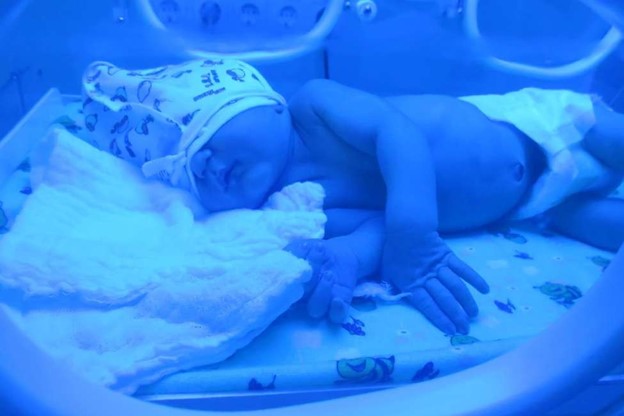
During phototherapy, one or more lights will be placed above the newborn.
The newborn will be undressed except for a diaper and placed on their back to absorb the most light.
Eye covers will be used to protect their eyes from the light.
Choice A) is not correct because glucose water is not mentioned as necessary during phototherapy.
Choice B) is not correct because the newborn should be undressed except for a
diaper during therapy.
Choice D) is not correct because applying lotion to the newborn’s skin is not mentioned as necessary during phototherapy.
Nursing Test Bank
Naxlex Comprehensive Predictor Exams
Related Questions
Correct Answer is A
Explanation
A nurse should discontinue oxytocin if the client experiences uterine hyperkinesia, which is defined as more than 5 contractions in 10 minutes.
Choice B is not correct because contractions lasting 60 seconds are within the normal range.
Choice C is not correct because moderate variability of the fetal heart rate is a reassuring sign.
Choice D is not correct because nonrepetitive early decelerations are generally considered benign and do not require intervention.
Correct Answer is C
Explanation
A nurse should report absent deep-tendon reflexes to the provider when a client is receiving magnesium sulfate via continuous IV infusion.
This is because reduced tendon reflexes can be a side effect of magnesium sulfate use during pregnancy.
Choice A is not correct because a decrease in the frequency of contractions is an expected outcome of magnesium sulfate use as a tocolytic to stop preterm labor.
Choice B is not correct because a urinary output of 35 mL/hr is within the normal range.
Choice D is not correct because an elevated blood pressure is not a known side effect of magnesium sulfate use during pregnancy.
Whether you are a student looking to ace your exams or a practicing nurse seeking to enhance your expertise , our nursing education contents will empower you with the confidence and competence to make a difference in the lives of patients and become a respected leader in the healthcare field.
Visit Naxlex, invest in your future and unlock endless possibilities with our unparalleled nursing education contents today