
A nurse is planning care for a newborn who is large for gestational age. Which of the following actions should the nurse include in the plan of care? (Select all that apply.)
Check the newborn's skin for ecchymosis.
Assist the mother to breastfeed the newbom after birth.
Obtain a stool sample of meconium.
Assist with administering a blood transfusion to the newborn.
Check the newborn's blood glucose level.
Correct Answer : A,B,E
A) Correct - Checking the newborn's skin for ecchymosis can help identify potential birth-related injuries, as large-for-gestational-age newborns might experience more trauma during delivery.
B) Correct - Breastfeeding can help regulate the newborn's blood glucose levels and provide necessary nutrients.
C) Incorrect- Meconium is the early stool passed by a newborn and might be checked for various reasons but is not specifically related to a large-for-gestational-age newborn.
D) Incorrect- Administering a blood transfusion to a newborn is not typically a part of the care plan for large-for-gestational-age newborns.
E) Correct- The nurse should check the newborn's blood glucose level regularly and provide interventions as needed.
Nursing Test Bank
Naxlex Comprehensive Predictor Exams
Related Questions
Correct Answer is A
Explanation
A) Correct - Newborn screening typically involves a heel stick using a lancet to collect a few drops of blood from the inner aspect of the newborn's heel.
B) Incorrect- Leaving the newborn's heel open to the air after the puncture is not necessary; a small bandage is typically applied.
C) Incorrect- An antiseptic is not typically applied after collecting the specimen, as it could interfere with the accuracy of the screening tests.
D) Incorrect- Warming the newborn's heel is not a standard step before collecting a specimen for newborn screening.
Correct Answer is C
Explanation
A) Incorrect- Applying ointment to the skin during phototherapy is typically avoided as it can interfere with the effectiveness of the therapy.
B) Incorrect- Giving distilled water after feedings is not a typical intervention for phototherapy.
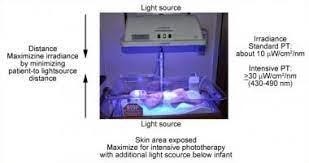
C) Correct - Repositioning the newborn every 2 to 3 hours is important to ensure adequate exposure of the skin to the phototherapy lights and to prevent pressure points.
D) Incorrect- Monitoring blood glucose levels is not a standard intervention during phototherapy unless there are specific indications for doing so.
Whether you are a student looking to ace your exams or a practicing nurse seeking to enhance your expertise , our nursing education contents will empower you with the confidence and competence to make a difference in the lives of patients and become a respected leader in the healthcare field.
Visit Naxlex, invest in your future and unlock endless possibilities with our unparalleled nursing education contents today