
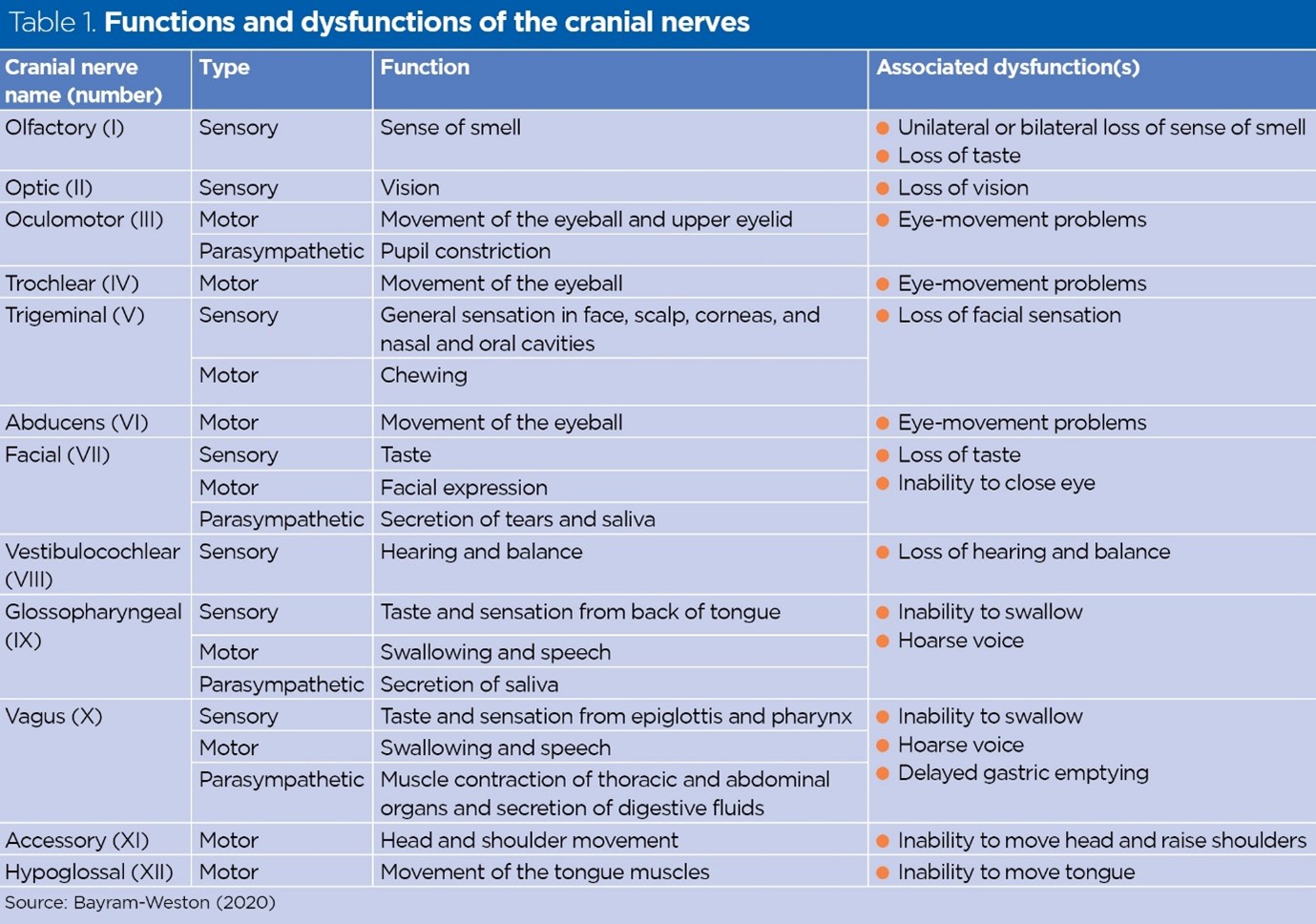
A nurse is performing a cranial nerve assessment on a client following a head injury. Which of the following findings should the nurse expect if the client has impaired function of the vestibulocochlear nerve (cranial nerve VIII)?
Disequilibrium with movement
Deviation of the tongue from midline
Loss of peripheral vision
mobility to smell
The Correct Answer is A
Choice A reason:
Disequilibrium with movement is correct. The vestibulocochlear nerve (cranial nerve VIII) is responsible for both hearing (cochlear component) and balance (vestibular component). Impaired function of this nerve can result in problems with equilibrium and balance, leading to symptoms such as disequilibrium or vertigo (a sensation of spinning or whirling), especially with movement.
Choice B Reason:
Deviation of the tongue from midline is incorrect. This is related to cranial nerve XII (hypoglossal nerve) and its role in tongue movement and control.
Choice C Reason:
Loss of peripheral vision is incorrect. This is related to cranial nerve II (optic nerve) and its role in vision.
Choice D Reason:
Inability to smell is incorrect. This is related to cranial nerve I (olfactory nerve) and its role in the sense of smell.
Nursing Test Bank
Naxlex Comprehensive Predictor Exams
Related Questions
Correct Answer is C
Explanation
Choice A Reason:
Peripheral pulses 2+ bilaterally - This indicates good peripheral circulation and is not typically a concerning finding.
Choice B Reason:
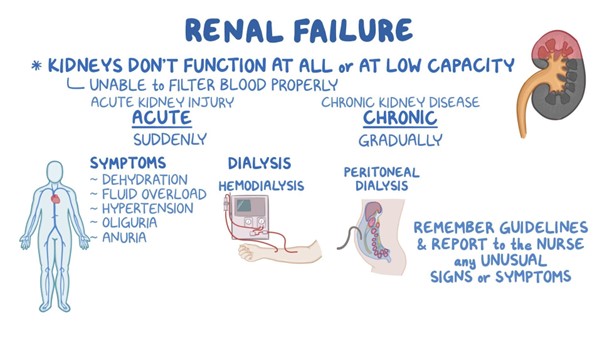
Creatinine 0.8 mg/dL - A creatinine level of 0.8 mg/dL is within the normal range and does not indicate acute kidney failure.
Choice C Reason:
Urine specific gravity 1.045 A urine specific gravity of 1.045 is significantly elevated and could indicate concentrated urine, which might be a concern in a client with acute kidney failure. Elevated specific gravity could suggest dehydration, impaired kidney function, or other kidney-related issues. The nurse should report this finding to the provider for further evaluation and intervention.
Choice D Reason:
Weight gain 1.1 kg (2.4 lb) in 24 hr - While weight gain should be monitored closely in clients with kidney failure, 1.1 kg in 24 hours might not be an immediate concern, depending on the client's overall condition and baseline weight. However, it should still be followed up on in subsequent assessments.
Correct Answer is A
Explanation
Choice A reason:
Initiating a continuous IV insulin infusion is the first priority. The priority intervention for a client in diabetic ketoacidosis (DKA) is to normalize blood glucose levels and reverse the ketoacidosis. Initiating a continuous IV insulin infusion is essential to rapidly lower the elevated blood glucose levels and counteract the metabolic acidosis associated with DKA.
Choice B reason:
Beginning a bicarbonate continuous IV infusion is generally not the priority in DKA management. While metabolic acidosis is a concern in DKA, insulin therapy and fluid resuscitation are typically the initial focus of treatment.
Choice C reason:
Checking potassium levels is important since potassium imbalances are common in DKA. However, while this is important, it is not the first priority. It's important to ensure that insulin therapy has been initiated before addressing potassium levels.
Choice D reason:
Administering 0.9% sodium chloride (normal saline) is a crucial part of DKA treatment but it is not the first priority as it helps correct dehydration and electrolyte imbalances. However, starting insulin therapy to address the underlying metabolic issue takes precedence.
Whether you are a student looking to ace your exams or a practicing nurse seeking to enhance your expertise , our nursing education contents will empower you with the confidence and competence to make a difference in the lives of patients and become a respected leader in the healthcare field.
Visit Naxlex, invest in your future and unlock endless possibilities with our unparalleled nursing education contents today