
A nurse is caring for an older adult client who has a hearing aid. Which of the following actions should the nurse take when the client reports hearing a whistling sound from the hearing aid?
Turn the hearing aid off for 5 min.
Clean the hearing aid with isopropyl alcohol.
Decrease the volume on the hearing aid.
Soak the hearing aid in warm water.
The Correct Answer is C
Choice A Reason:
Turning the hearing aid off for 5 min is inappropriate. Turning off the hearing aid may not address the underlying issue of feedback. Adjusting the volume or checking for proper placement is more appropriate.
Choice B Reason:
Cleaning the hearing aid with isopropyl alcohol is inappropriate. While cleaning the hearing aid is important for maintenance, using isopropyl alcohol may damage certain components. It's generally recommended to use a specialized cleaning solution recommended by the hearing aid manufacturer.
Choice C Reason:
Decreasing the volume on the hearing aid is appropriate. The whistling sound, also known as feedback, can occur when the volume is set too high. Lowering the volume should help alleviate the feedback and improve the client's experience with the hearing aid.
D. Soak the hearing aid in warm water.
Soaking a hearing aid in water is not recommended, as it can damage the electronic components. Hearing aids are sensitive to moisture, and water exposure can lead to malfunction.
Nursing Test Bank
Naxlex Comprehensive Predictor Exams
Related Questions
Correct Answer is C
Explanation
Choice A Reason:
Using the FACES pain scale to gauge the client's level of pain is appropriate. This scale relies on the client's ability to understand and communicate using a specific language, which might not be possible if there is a language barrier.
Choice B Reason:
Using a communication board to interact with the client is inappropriate. While communication boards can be helpful, they might not effectively gauge the client's level of pain, especially if the client's primary language isn't available on the board.
Choice C Reason:
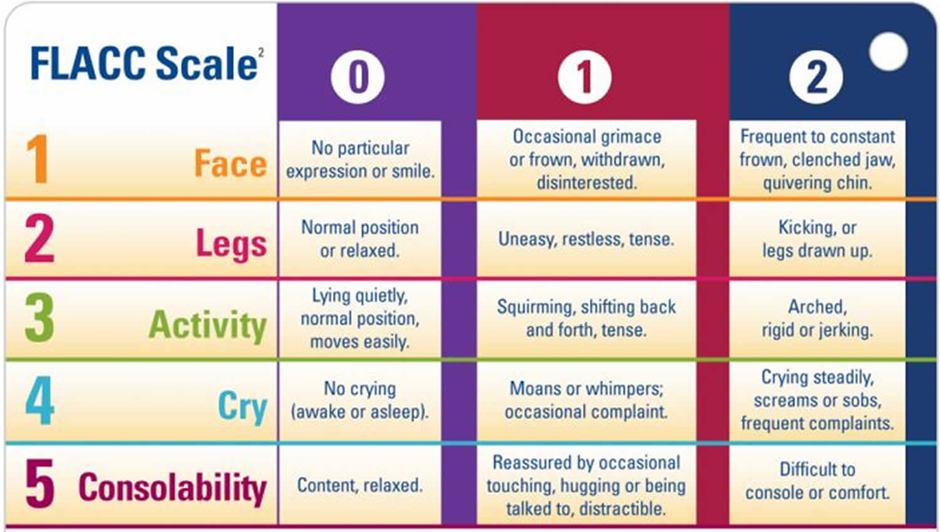
Using the Face, Legs, Activity, Cry, Consolability (FLACC) scale to measure the client's pain level is appropriate. The FLACC scale is a pain assessment tool that evaluates pain in nonverbal patients or those who can't communicate effectively. It assesses facial expressions, leg movement, activity level, crying, and consolability to determine the level of pain the patient is experiencing.
Choice D Reason:
Asking an assistive personnel who speaks the same language as the client to interpret is inappropriate. Relying on an interpreter, even if they speak the same language as the client, might not be the best approach for pain assessment, as nuances related to pain expression and interpretation might be better captured through a standardized pain assessment tool like the FLACC scale.
Correct Answer is B
Explanation
Choice A Reason:
Inflating the catheter's balloon is inappropriate. Inflating the balloon at this point is not recommended. The balloon should only be inflated once the catheter is in the bladder and urine starts to flow.
Choice B Reason:
Twisting the catheter gently is appropriate. Twisting the catheter gently may help navigate any obstruction or resistance within the urethra. However, it is crucial to be cautious and not force the catheter. If resistance persists or if the catheter cannot be advanced further, the nurse should reassess the situation and consider alternative actions, such as selecting a smaller catheter or seeking assistance from a more experienced healthcare provider.
Choice C Reason:
Applying lidocaine gel to the urethra is inappropriate. Applying lidocaine gel may be appropriate for lubrication and to minimize discomfort during catheter insertion, but it will not address the issue of resistance or lack of urine flow.
Choice D Reason:
Lowering the penis to a 45° angle is inappropriate. Adjusting the angle of the penis is not likely to resolve the issue of resistance. Twisting the catheter gently or reassessing the situation would be more appropriate.
Whether you are a student looking to ace your exams or a practicing nurse seeking to enhance your expertise , our nursing education contents will empower you with the confidence and competence to make a difference in the lives of patients and become a respected leader in the healthcare field.
Visit Naxlex, invest in your future and unlock endless possibilities with our unparalleled nursing education contents today