
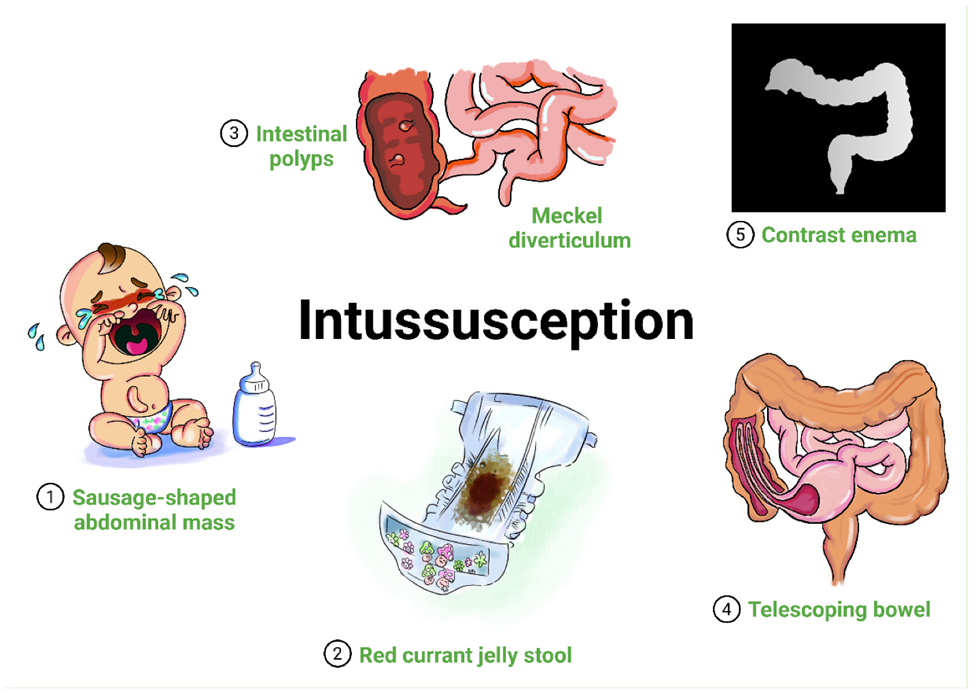
A nurse is caring for a toddler who has intussusception. Which of the following manifestations should the nurse expect?
Drooling
Increased appetite
Mucus in stools
Jaundice
The Correct Answer is C
A. Drooling - Drooling is not typically associated with intussusception. Intussusception is a condition where one portion of the intestine telescopes into another, leading to bowel obstruction and subsequent symptoms such as abdominal pain, vomiting, and "currant jelly" stools.
B. Increased appetite - Increased appetite is unlikely in a toddler with intussusception. Instead, affected toddlers may experience symptoms such as abdominal pain, vomiting, and lethargy, which can lead to decreased appetite.
C. Mucus in stools - Mucus in stools is a characteristic finding in intussusception. As the telescoping of the intestine causes irritation and inflammation, mucus may be passed in the stool along with blood and, in some cases, a characteristic "currant jelly" appearance.
D. Jaundice - Jaundice is not a typical manifestation of intussusception. It may be present in conditions affecting the liver or bile ducts, such as biliary atresia or obstructive jaundice, but it is not a direct symptom of intussusception.
Nursing Test Bank
Naxlex Comprehensive Predictor Exams
Related Questions
Correct Answer is A
Explanation
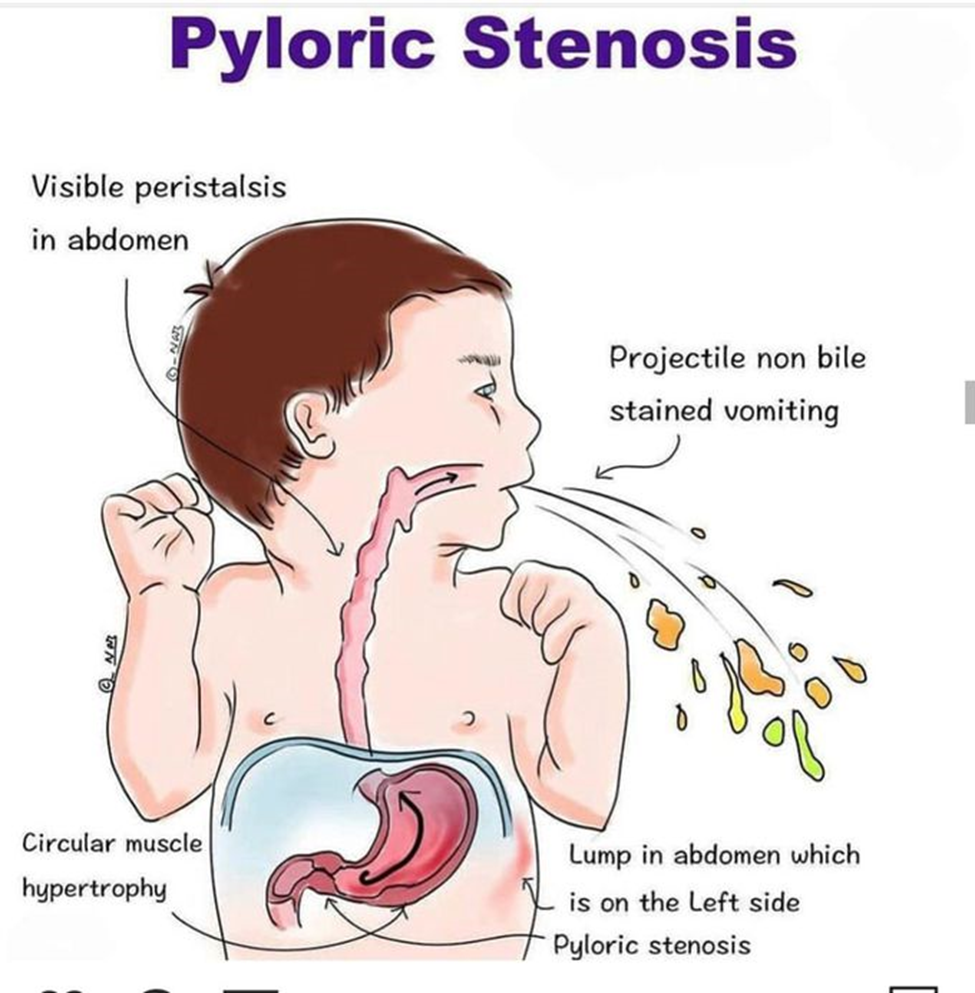
A. Projectile vomiting
Projectile vomiting is a classic symptom of pyloric stenosis in infants. It typically occurs within 30 minutes of feeding and is forceful, often projecting several feet away from the infant. This occurs due to the obstruction at the pyloric sphincter, leading to the stomach forcefully emptying its contents.
B. Metabolic acidosis
Metabolic acidosis is not a typical finding associated with pyloric stenosis. Pyloric stenosis leads to vomiting, which can result in dehydration and electrolyte imbalances, but it typically does not cause metabolic acidosis directly.
C. Effortless regurgitation
Effortless regurgitation is not a characteristic finding of pyloric stenosis. In pyloric stenosis, vomiting is forceful and projectile, rather than a passive regurgitation of stomach contents.
D. Distended abdomen
A distended abdomen can be a finding in pyloric stenosis. The obstruction at the pyloric sphincter can lead to gastric retention, causing the stomach to become distended over time. However, it's important to note that not all infants with pyloric stenosis will present with a visibly distended abdomen.
Correct Answer is A
Explanation
A. Pain management is critical for burn care, especially before activities like physical therapy that can be painful. Administering pain medication 30 minutes before therapy helps ensure the child is more comfortable and able to participate effectively in rehabilitation. This is a recommended intervention.
B. While involving the child in decisions about their care can promote autonomy and improve adherence, the schedule for burn care and therapy should be based on medical needs and healing processes rather than the child's preference. Care schedules should be designed to optimize healing and manage pain effectively.
C. Provide low-calorie snacks:Burn patients typically have increased nutritional needs due to the high metabolic demands of healing. High-calorie, protein-rich snacks are usually recommended to support wound healing and overall recovery, rather than low-calorie options.
D. Maintain medical asepsis during dressing changes: For burn care, maintaining sterile technique is critical to prevent infection. Medical asepsis is generally not sufficient; sterile technique is required for dressing changes to reduce the risk of infection.
Whether you are a student looking to ace your exams or a practicing nurse seeking to enhance your expertise , our nursing education contents will empower you with the confidence and competence to make a difference in the lives of patients and become a respected leader in the healthcare field.
Visit Naxlex, invest in your future and unlock endless possibilities with our unparalleled nursing education contents today