
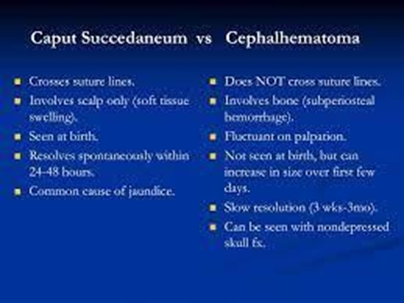
A nurse is caring for a newborn delivered by vaginal birth with a vacuum assist. The newborn’s mother asks about the swollen area on her son’s head. After palpation to identify that the swelling crosses the suture line, which of the following is an appropriate response by the nurse?
“This is a cephalhematoma, which can occur spontaneously.”
“Caput succedaneum occurs due to compression of blood vessels.”
“This is erythema toxicum, which is a transient condition.”
“Mongolian spots can be found on the skin of many newborns.”
The Correct Answer is B
A. A cephalhematoma is a collection of blood under the periosteum that does not cross the suture lines and can take weeks to resolve.
B. Caput succedaneum occurs due to compression of blood vessels during delivery, resulting in edema and bruising of the scalp. It crosses the suture lines and usually resolves within a few days and does not cause any complications.
C. Erythema toxicum is a rash that is unrelated to head swelling.
D. Mongolian spots are blue-gray patches on the skin, not associated with head swelling.
Nursing Test Bank
Naxlex Comprehensive Predictor Exams
Related Questions
Correct Answer is B
Explanation
A. Keeping the baby's bassinet away from fans and air conditioning is a correct practice to prevent chilling.
B. Checking the baby's temperature rectally every hour is not a standard practice and may lead to unnecessary discomfort for the baby.
C. Keeping the baby's head covered is generally recommended for warmth.
D. Keeping the infant swaddled in a warm blanket is a good practice for maintaining warmth.
Correct Answer is C
Explanation
A. Placing pillows under the client's knees may provide comfort but does not address the prevention of thromboembolic disease.
B. Massaging the client's posterior lower legs may increase the risk of dislodging a clot in clients with a history of thromboembolic disease.
C. Having the client ambulate helps prevent venous stasis and reduces the risk of thromboembolic events.
D. Applying warm, moist heat to the client's lower extremities may provide comfort but does not address the prevention of thromboembolic disease.
Whether you are a student looking to ace your exams or a practicing nurse seeking to enhance your expertise , our nursing education contents will empower you with the confidence and competence to make a difference in the lives of patients and become a respected leader in the healthcare field.
Visit Naxlex, invest in your future and unlock endless possibilities with our unparalleled nursing education contents today