
A nurse is caring for a client in the emergency department (ED).
The Correct Answer is []
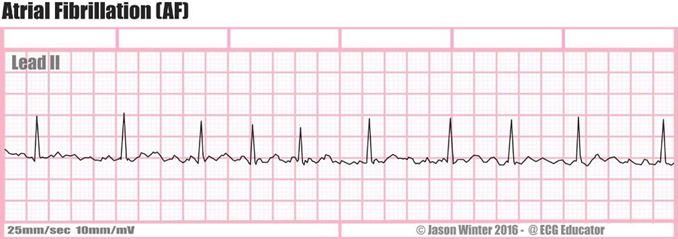
AF is characterized by irregular, rapid heartbeat (100 to 175 beats per minute (bpm) and the absence of distinct P waves.
Management of unstable atrial fibrillation include immediate pharmacological or electrical cardioversion and anticoagulation.
Atrial fibrillation leads to ineffective pumping and stasis of blood in the heart which increases the risk of stroke.
On initiating anticoagulation, PTT/INR is important to ensure that the drug is administered at doses that achieve the optimal therapeutic effect.
Nursing Test Bank
Naxlex Comprehensive Predictor Exams
Related Questions
Correct Answer is C
Explanation
C Atrial fibrillation (AF) is characterized by rapid, irregular electrical activity in the atria, leading to an irregularly irregular ventricular response. AF often results in palpitations, fatigue, and dizziness due to the irregular heart rhythm and inefficient cardiac output. A significant pulse deficit may also be present due to the irregularity of the ventricular response compared to the atrial activity. Given the sudden onset of irregular palpitations, fatigue, dizziness, and a significant pulse deficit, atrial fibrillation is a likely dysrhythmia in this scenario.
A First-degree AV block is characterized by a prolonged PR interval on the electrocardiogram (ECG), indicating delayed conduction between the atria and ventricles. While it can indicate conduction system abnormalities, it typically does not result in rapid or irregular palpitations, fatigue, or dizziness.
Therefore, it is less likely to be the cause of the client's symptoms.
B Sinus tachycardia is characterized by a rapid heart rate originating from the sinus node, typically with a regular rhythm. While sinus tachycardia can cause palpitations and fatigue, it is less likely to result in an irregular heart rate with a significant pulse deficit. Therefore, it is less likely to be the cause of the client's symptoms.
D Sinus bradycardia is characterized by a slow heart rate originating from the sinus node. While sinus bradycardia can cause fatigue and dizziness, it typically does not result in a rapid or irregular heart rate. Therefore, it is less likely to be the cause of the client's symptoms.
Correct Answer is B
Explanation
B. This is advised to prevent hypoxemia, which can manifest as tachycardia and arrhythmia, conditions indicated by an increased and irregular heart rate. Pre-oxygenation helps maintain adequate oxygen levels in the blood, which can be compromised during the suctioning process.
A. Obtaining a cardiology consult might be necessary if the client's heart rate increases and becomes irregular. However, it's not the immediate action the nurse should take. This option is more appropriate for addressing the underlying cause of the client's dysrhythmia rather than the immediate management during suctioning.
C. Suctioning the client less frequently might be appropriate if the client's response to suctioning is causing distress or physiological changes like increased heart rate. However, if suctioning is necessary due to secretions in the airway, simply reducing the frequency might not be sufficient to address the client's cardiovascular response.
D. Administering an antidysrhythmic medication should be considered if the client's heart rate increases and becomes irregular during or after suctioning, especially if the dysrhythmia persists or worsens.
However, this should be done under the guidance of a healthcare provider and after assessing the client's overall condition, including potential causes of the dysrhythmia.
Whether you are a student looking to ace your exams or a practicing nurse seeking to enhance your expertise , our nursing education contents will empower you with the confidence and competence to make a difference in the lives of patients and become a respected leader in the healthcare field.
Visit Naxlex, invest in your future and unlock endless possibilities with our unparalleled nursing education contents today