
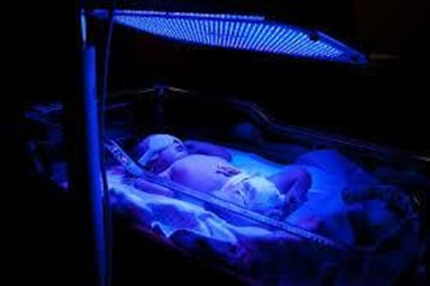
A nurse is caring for a 1-day-old newborn who has jaundice and is receiving phototherapy. Which of the following actions should the nurse take?
Keep the infant's head covered with a cap.
Apply lotion to the newborn every 4 hr.
Give the infant 30 mL (1 oz) of glucose water every 2 hr.
Ensure that the newborn wears a diaper.
The Correct Answer is D
A. The infants’s head should not be covered while receiving phototherapy, as the skin needs to be exposed to the therapy. However, it is essential to ensure that the infant's eyes are protected from the light.
B. Applying lotion may interfere with the effectiveness of phototherapy by blocking the light’s effects and is unnecessary for managing jaundice in newborns.
C. Giving glucose water is unnecessary and may interfere with the infant's hydration and nutritional needs during phototherapy.
D. Ensuring that the newborn wears a diaper to prevent soiling of the phototherapy equipment and to allow for the monitoring of urinary output, which is an important indicator of the newborn's health during treatment.
Nursing Test Bank
Naxlex Comprehensive Predictor Exams
Related Questions
Correct Answer is D
Explanation
A. This would involve irregular beats and potentially a visible compensatory pause, not a prolonged PR interval.
B. Atrial fibrillation features an irregularly irregular rhythm and no discernible PR intervals.
C. Defined by a heart rate less than 60/min with a normal rhythm and electrical pattern, which does not apply here given the normal rate and prolonged PR interval.
D. A first-degree atrioventricular (AV) block is characterized by a prolonged PR interval (greater than 0.20 seconds) in the presence of a normal heart rate and rhythm, which aligns with the client’s PR interval of 0.24 seconds and a heart rate of 69/min
Correct Answer is D
Explanation
A. EMLA cream is used for pain relief and is not typically necessary for quick procedures like catheterization in toddlers.
B. This is not necessary for catheterization; it’s more relevant to a clean catch or midstream urine sample.
C. This size is too large for a toddler; smaller sizes, typically 5-8 French, are used for pediatric patients.
D. When performing a catheterization, especially in a sterile procedure like obtaining a urine culture, it is critical to wear sterile gloves to prevent infection
Whether you are a student looking to ace your exams or a practicing nurse seeking to enhance your expertise , our nursing education contents will empower you with the confidence and competence to make a difference in the lives of patients and become a respected leader in the healthcare field.
Visit Naxlex, invest in your future and unlock endless possibilities with our unparalleled nursing education contents today