
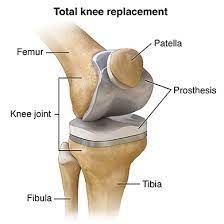
A nurse is assisting with the care of a client who is 6 hr postoperative following a right total knee arthroplasty. Which of the following actions should the nurse take?
Maintain the head of the client's bed in high-Fowler's position.
Remove the client's dressing when it becomes saturated.
Check the client's pedal pulses every hour.
Place an abductor wedge under the client's right knee.
The Correct Answer is C
A nurse assisting with the care of a client who is 6 hours postoperative following a right total knee arthroplasty should check the client's pedal pulses every hour. This is important to assess the adequacy of blood flow and tissue perfusion to the extremity.
It is also important to monitor the client's pain level, administer pain medication as ordered, and encourage the client to perform exercises as appropriate.
The head of the client's bed should be maintained in a semi-Fowler's position to promote optimal respiratory function, and the client's dressing should be changed only as needed and with sterile technique.
An abductor wedge is not typically used following knee arthroplasty surgery.
Nursing Test Bank
Naxlex Comprehensive Predictor Exams
Related Questions
Correct Answer is D
Explanation
At this age, a child should have their teeth cleaned twice daily with a soft-bristled toothbrush and water.
A small amount of fluoride toothpaste (about the size of a grain of rice) can be used after age 2.
Flossing is not typically recommended at this age.
The toothbrush should be positioned at a 45-degree angle towards the gum line, and a pea-sized amount of toothpaste should be used.
Correct Answer is ["C","D","E","F"]
Explanation
A. Inform the client that an advance directive discontinues further care.This statement is incorrect. An advance directive does not discontinue further care but outlines the client's preferences for medical treatment if they become unable to communicate their wishes.
B. Initiate a power of attorney for health care documents.This is not the nurse's responsibility. Initiating a power of attorney for health care documents typically involves legal consultation, and the client should be referred to appropriate resources.
C. Document that the provider discussed do-not-resuscitate status with the client.This is correct. The nurse should document that the provider has discussed DNR (Do Not Resuscitate) status with the client, ensuring that the discussion and decision are clearly recorded in the medical record.
D. Provide the client with written information about advance directives.This is correct. The nurse is responsible for providing the client with written information about advance directives, ensuring the client understands their rights and options.
E. Communicate advance directives status via the medical record and shift report.This is correct. The nurse must ensure that the client's advance directive status is clearly communicated in the medical record and during shift reports to ensure continuity of care.
F. Instruct the client that an advance directive is a legal document and must be honored by care providers.This is correct. The nurse should inform the client that an advance directive is a legal document that healthcare providers are required to honor, according to the client's wishes.

Whether you are a student looking to ace your exams or a practicing nurse seeking to enhance your expertise , our nursing education contents will empower you with the confidence and competence to make a difference in the lives of patients and become a respected leader in the healthcare field.
Visit Naxlex, invest in your future and unlock endless possibilities with our unparalleled nursing education contents today