
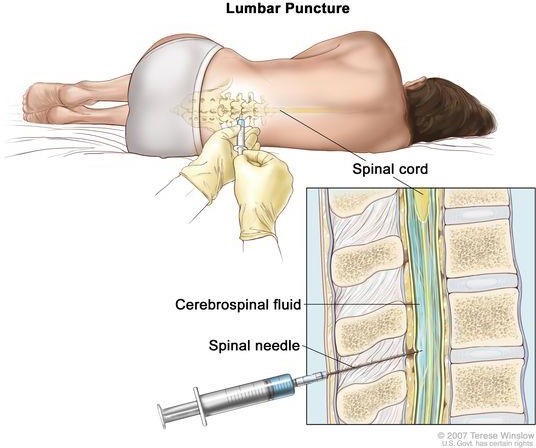
A nurse is assisting the provider with a lumbar puncture for a client who has manifestations of meningitis.
Into which of the following positions should the nurse assist the client?
Head flexed to the chest and her knees pulled up to the abdomen
Arms raised above her head with her legs elevated on pillows
Prone with her arms at her side and her legs extended
Trendelenburg with her body in Sims' position
The Correct Answer is A
Nursing Test Bank
Naxlex Comprehensive Predictor Exams
Related Questions
Correct Answer is A
Explanation
Quoting client comments verbatim in the documentation should be avoided. Instead, the nurse should summarize or paraphrase the relevant information provided by the client. This helps to maintain confidentiality and professionalism in the documentation process.
Documenting giving a dose of pain medication just prior to administration: Documentation should accurately reflect the timing and administration of medications. It is not appropriate to document giving a dose of medication just prior to administering it, as it would not provide an accurate account of the client's care. The medication administration should be documented after it has been given.
Limiting documentation to subjective information: Documentation should include both objective and subjective information. Objective information refers to measurable and observable data, while subjective information represents the client's thoughts, feelings, and experiences.
Including both types of information provides a comprehensive view of the client's condition and the care provided.
Documenting information telephoned in by a nurse who left the unit for the day: Documentation should only include information that has been directly observed or obtained by the nurse providing care. It is not appropriate to document information telephoned in by a nurse who is not present and available to verify or provide additional details. Each nurse should be responsible for documenting their own observations and actions.
Accurate and comprehensive documentation is crucial for maintaining continuity of care, ensuring effective communication among the healthcare team, and promoting the client's safety and well-being. Nurses should adhere to institutional policies and guidelines regarding documentation practices and prioritize accuracy, confidentiality, and professionalism in their documentation.
Correct Answer is D
Explanation
Potassium is an essential electrolyte that plays a crucial role in various bodily functions. However, for individuals with an electrolyte imbalance, it is often necessary to limit their potassium intake. Among the options provided, baked chicken breast is the lowest in potassium. Cantaloupe is relatively high in potassium. A cup of diced cantaloupe contains about 430 mg of potassium.
Sweet potatoes are known for their high potassium content. A medium-sized sweet potato with skin contains about 542 mg of potassium.
Orange juice also contains a moderate amount of potassium. An 8-ounce serving of orange juice typically contains around 450 mg of potassium.
Chicken breast is naturally low in potassium compared to fruits and vegetables. It contains about 260 mg of potassium per 4-ounce serving.
Therefore, among the given options, the baked chicken breast is the lowest in potassium and would be the most suitable choice for a client with an electrolyte imbalance requiring a low-potassium diet.
Whether you are a student looking to ace your exams or a practicing nurse seeking to enhance your expertise , our nursing education contents will empower you with the confidence and competence to make a difference in the lives of patients and become a respected leader in the healthcare field.
Visit Naxlex, invest in your future and unlock endless possibilities with our unparalleled nursing education contents today