
A nurse is reinforcing teaching with a parent of a child who has asthma about the administration of montelukast. Which of the following statements by the parent indicates an understanding of the teaching?
"I will give this medication to my child every 2 hours if he is wheezing."
"It takes 2 months of scheduled use before this medication is effective."
"I can stop giving my child this medication if he is taking a steroid.
will give this medication to my child once daily in the evening "
The Correct Answer is D
Montelukast is a medication commonly used for the maintenance treatment of asthma. It is not used for immediate relief of wheezing or acute symptoms. Instead, it is taken on a scheduled basis to help control and prevent asthma symptoms over time. The recommended dosing regimen for montelukast in children is once daily in the evening.
The statement about giving the medication every 2 hours, if the child is wheezing, is incorrect, as this medication is not meant to be used for immediate relief of symptoms. It is a preventive medication.
The statement about it taking 2 months of scheduled use before the medication is effective is incorrect. While it may take some time for the medication to reach its full effect, improvement in symptoms can often be seen within a few days to weeks of starting treatment.
The statement about stopping the medication if the child is taking a steroid is incorrect. Montelukast can be used in conjunction with other asthma medications, including steroids, as prescribed by the healthcare provider. It is important to follow the prescribed treatment plan and not discontinue any medication without consulting the healthcare provider.
Nursing Test Bank
Naxlex Comprehensive Predictor Exams
Related Questions
Correct Answer is A
Explanation
This statement reflects an important recommendation for car seat safety. It is recommended to keep infants and toddlers rear-facing in their car seats until they reach the age of 2 or until they outgrow the height and weight limits specified by the car seat manufacturer. Rear-facing car seats provide better protection for the child's head, neck, and spine in the event of a crash.
"I should position the car seat's retainer clip at the level of my baby's belly button." The correct position for the retainer clip is at the armpit level. It should be positioned across the chest, resting on the bony part of the child's shoulders. Placing the retainer clip at the level of the belly button can be unsafe and may not provide proper protection.
"I should enable the airbag when my baby is in the front seat of the car." It is not recommended to place a rear-facing car seat in the front seat of a vehicle with an active airbag. The force of the airbag deployment can cause serious injuries to the child. The safest place for a rear-facing car seat is in the back seat of the vehicle.
"I should place my baby in the car seat at a 90-degree angle." The angle at which the car seat is installed depends on the specific instructions provided by the car seat manufacturer. It is important to follow the manufacturer's guidelines for proper installation. Some car seats have built-in angle indicators or adjustable recline positions to help achieve the correct angle for optimal safety.
Correct Answer is B
Explanation
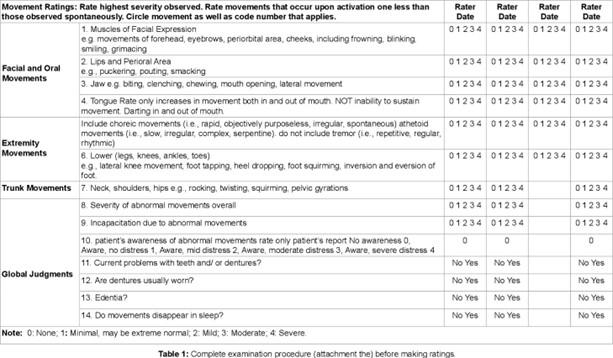
The AIMS is specifically designed to assess for the presence and severity of abnormal involuntary movements, which can be a side effect of long-term antipsychotic medication use, including tardive dyskinesia. It consists of a series of standardized movements and observations that assess different body regions for abnormal movements. The nurse can use this tool to monitor the client's movements and identify any signs of tardive dyskinesia.
A. Mental Status Examination (MSE): The MSE is a comprehensive assessment of a client's mental status, including their cognition, mood, and thought processes. While the MSE is an important tool in assessing overall mental health, it is not specific to tardive dyskinesia.
C. Patient Health Questionnaire-9 (PHQ-9): The PHQ-9 is a screening tool for depression that assesses the severity of depressive symptoms. While depression can be a comorbidity in individuals with schizophrenia, the PHQ-9 does not directly assess for tardive dyskinesia.
D. Brief Psychiatric Rating Scale (BPRS): The BPRS is a rating scale used to assess the severity of psychiatric symptoms in individuals with mental disorders. While it is useful in evaluating overall symptomatology in schizophrenia, it does not specifically target tardive dyskinesia.
Whether you are a student looking to ace your exams or a practicing nurse seeking to enhance your expertise , our nursing education contents will empower you with the confidence and competence to make a difference in the lives of patients and become a respected leader in the healthcare field.
Visit Naxlex, invest in your future and unlock endless possibilities with our unparalleled nursing education contents today