
A nurse is assessing a client who has Graves' disease and is taking methimazole.
Which of the following findings indicates the client needs a lower dose of the medication?
Exophthalmos.
Diaphoresis.
Bradycardia.
Weight loss.
The Correct Answer is C
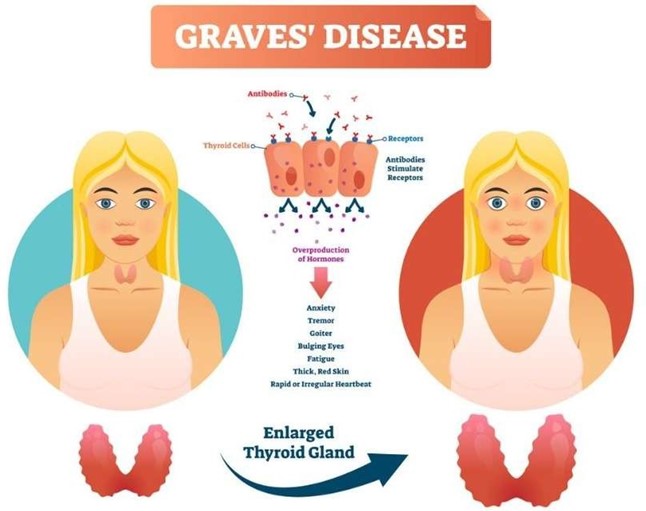
Methimazole is a medication used to treat hyperthyroidism, a condition where the thyroid gland produces too much thyroid hormone.
Bradycardia, or a slow heart rate, can be a sign that the client’s thyroid hormone levels have become too low, indicating that the dose of methimazole may need to be decreased.
Choice A is wrong because Exophthalmos, is not an indication for a lower dose of methimazole as it is a symptom of Graves’ disease itself and not related to the medication.
Choice B is wrong because Diaphoresis, or excessive sweating, is also not an indication for a lower dose of methimazole as it can be a symptom of hyperthyroidism.
Choice D is wrong because Weight loss, is also not an indication for a lower dose of methimazole as it can be a symptom of hyperthyroidism.
Nursing Test Bank
Naxlex Comprehensive Predictor Exams
Related Questions
Correct Answer is B
Explanation
When administering heparin subcutaneously, the nurse should grasp the skin between the thumb and forefinger throughout the injection to minimize bleeding following the injection.
Choice A is wrong because Use the Z-track method to administer the medication, is not the correct answer because the Z-track method is a technique used for intramuscular injections, not subcutaneous injections.
Choice C is wrong because Aspirate the syringe prior to injecting the heparin, is not the correct answer because aspiration is not necessary when administering heparin subcutaneously.
Choice D is wrong because Gently massage the site following the injection, is not the correct answer because massaging the injection site can increase the risk of bruising and bleeding.
Correct Answer is A
Explanation
Sodium polystyrene sulfonate is a medication used to treat high levels of potassium in the blood.
A potassium level of 4.6 mEq/L is within the normal range, indicating that the medication has been effective in reducing high levels of potassium in the blood.
Choice B is wrong because Calcium 8 mg/dL, is not the correct answer because it measures the level of calcium in the blood and is not specifically related to sodium polystyrene sulfonate therapy.
Choice C is wrong because Magnesium.1 mEq/L, is not the correct answer because it measures the level of magnesium in the blood and is not specifically related to sodium polystyrene sulfonate therapy.
Choice D is wrong because Sodium 150 mEq/L, is not the correct answer because it measures the level of sodium in the blood and is not specifically related to sodium polystyrene sulfonate therapy.
Whether you are a student looking to ace your exams or a practicing nurse seeking to enhance your expertise , our nursing education contents will empower you with the confidence and competence to make a difference in the lives of patients and become a respected leader in the healthcare field.
Visit Naxlex, invest in your future and unlock endless possibilities with our unparalleled nursing education contents today