
A nurse is administering ferrous sulfate elixir to a client who has iron deficiency anemia.
Which of the following actions should the nurse take?
Dilute the medication with milk.
Give the medication with a caffeinated beverage.
Administer the medication through a straw.
Provide an antacid with the medication.
The Correct Answer is C
Administer the medication through a straw.
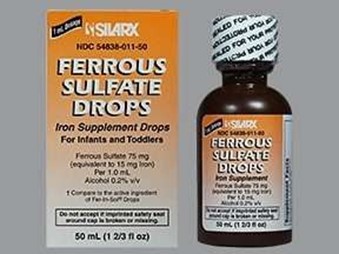
This is because ferrous sulfate elixir can stain the teeth, so using a straw can help prevent this from happening.
Choice A is wrong because milk can interfere with the absorption of iron.
Choice B is wrong because caffeine can also interfere with iron absorption.
Choice D is wrong because antacids can reduce the absorption of iron and should be avoided within 2 hours of taking ferrous sulfate.
Nursing Test Bank
Naxlex Comprehensive Predictor Exams
Related Questions
Correct Answer is A
Explanation
The nurse should administer the medication over 2 hr because amphotericin B lipid complex should be infused slowly intravenously.
Choice B is wrong because priming the tubing with 0.9% sodium chloride is not mentioned as a necessary action when administering amphotericin B lipid complex via intermittent IV bolus.
Choice C is wrong because discarding the medication if it is yellow is not mentioned as a necessary action when administering amphotericin B lipid complex via intermittent IV bolus.
Choice D is wrong because a gravity flow set is not mentioned as a necessary action when administering amphotericin B lipid complex via intermittent IV bolus.
Correct Answer is B
Explanation
Ranitidine is a histamine H2-receptor antagonist that blocks histamine-mediated gastric acid secretion.
Antacids can interfere with the absorption of ranitidine, so it is important to separate their administration by at least 1 hour.
Choice A is wrong because aspirin is a type of nonsteroidal anti-inflammatory drug (NSAID) which can increase the risk of peptic ulcers.
Choice C is wrong because fine hand tremors are not a known side effect of ranitidine.
Choice D is wrong because there is no need to avoid dairy products when taking ranitidine.
Whether you are a student looking to ace your exams or a practicing nurse seeking to enhance your expertise , our nursing education contents will empower you with the confidence and competence to make a difference in the lives of patients and become a respected leader in the healthcare field.
Visit Naxlex, invest in your future and unlock endless possibilities with our unparalleled nursing education contents today