
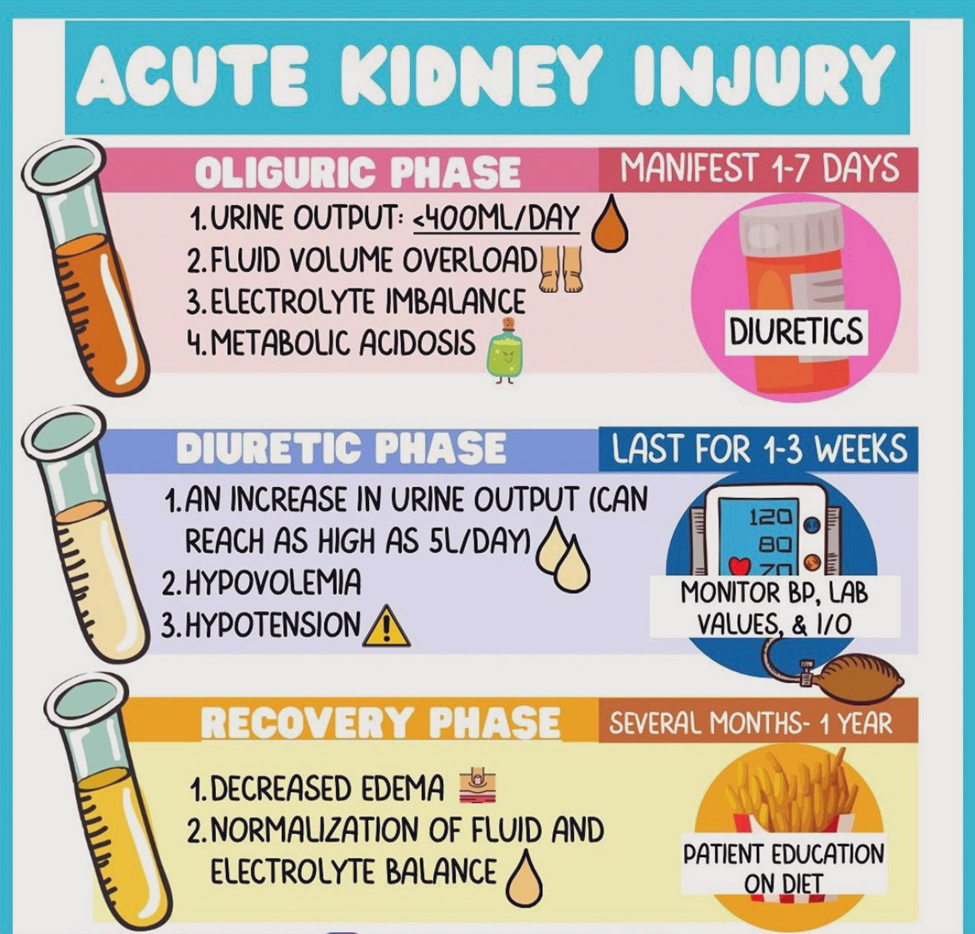
A client who has developed acute kidney injury (AKI) due to an aminoglycoside antibiotic has moved from the oliguric phase to the diuretic phase of AKI Which parameters are most important for the nurse to plan to carefully monitor?
Hypovolemia and electrocardiographic (ECG) changes.
Uremic irritation of mucous membranes and skin surfaces.
Side effects of total parental nutrition (TPN) and Intralipids.
Elevated creatinine and blood urea nitrogen (BUN)
The Correct Answer is A
A. Hypovolemia and electrocardiographic (ECG) changes:
During the diuretic phase of AKI, there is an increased urine output, and the risk of dehydration and hypovolemia is elevated. The nurse should closely monitor fluid balance to prevent dehydration, and ECG changes may occur due to electrolyte imbalances (such as hypokalemia) associated with diuresis.
B. Uremic irritation of mucous membranes and skin surfaces:
Uremic symptoms are more prominent in the oliguric phase of AKI when waste products accumulate in the blood. In the diuretic phase, the focus shifts more toward managing fluid and electrolyte balance.
C. Side effects of total parental nutrition (TPN) and Intralipids:
TPN and Intralipids are not directly related to the diuretic phase of AKI. Monitoring for side effects of TPN and Intralipids may be relevant in other clinical contexts but is not the primary concern in the diuretic phase.
D. Elevated creatinine and blood urea nitrogen (BUN):
Monitoring creatinine and BUN levels is important for assessing kidney function, but in the diuretic phase, the focus shifts to managing fluid and electrolyte balance. The risk of hypovolemia and electrolyte imbalances is more immediate during this phase.
Nursing Test Bank
Naxlex Comprehensive Predictor Exams
Related Questions
Correct Answer is D
Explanation
A. Reduced pain in eczematous areas:
While hydration of the skin may contribute to reduced pain in some cases, the primary goal of urea cream is to moisturize and hydrate the skin rather than directly address pain.
B. Healing with a return to normal skin appearance:
Urea cream can contribute to the healing process by hydrating the skin and promoting the removal of dry, scaly skin. However, complete healing and a return to normal skin appearance may also depend on the underlying cause of eczema and other factors.
C. Decreased weeping of ulcerations in affected areas:
Urea cream can help reduce excessive dryness and weeping in eczematous areas by promoting hydration and moisture balance. However, it may not directly address ulcerations, and other interventions may be needed for open wounds.
D. Hydration of affected dry skin areas:
This is the correct answer. Urea is a natural moisturizing factor that helps retain water in the skin. Applying urea cream to affected dry skin areas is expected to hydrate the skin, reduce dryness, and improve the overall moisture balance.
Correct Answer is D
Explanation
A. Eat a diet high in carotene:
While a healthy diet is important for overall well-being, there is no evidence to suggest that a diet high in carotene specifically prevents or treats glaucoma. The focus in glaucoma management is on intraocular pressure control.
B. Wear prescription glasses:
Prescription glasses may be beneficial for addressing refractive errors, but they do not specifically address the management of glaucoma. The client's concern about driving through a tunnel is more likely related to changes in peripheral vision associated with glaucoma.
C. Avoid frequent eye pressure measurements:
This is not the most important instruction. Monitoring intraocular pressure is a crucial aspect of glaucoma management, and the frequency of measurements is determined by the healthcare provider. Regular monitoring helps assess the effectiveness of treatment and disease progression.
D. Maintain the prescribed eye drop regimen:
This is the correct answer. The most important instruction for the client is to adhere to the prescribed eye drop regimen. Medications, often in the form of eye drops, are commonly used to lower intraocular pressure and manage glaucoma. Consistent use of prescribed medications is critical for controlling the condition and preventing further vision loss.
Whether you are a student looking to ace your exams or a practicing nurse seeking to enhance your expertise , our nursing education contents will empower you with the confidence and competence to make a difference in the lives of patients and become a respected leader in the healthcare field.
Visit Naxlex, invest in your future and unlock endless possibilities with our unparalleled nursing education contents today