
A client began taking lithium for the treatment of bipolar disorder approximately one month ago. The client asks if it is normal to have gained 12 pounds in this time frame. Which is the appropriate nursing reply?
"Weight gain is a common but troubling side effect."
"What have you been eating? Weight gain is not usually associated with lithium."
"Weight gain occurs only during the first month of treatment with this drug."
"That's strange. Weight loss is the typical pattern."
The Correct Answer is A
Choice A reason: Weight gain is indeed a known side effect of lithium treatment, and acknowledging this can validate the client's experience.
Choice B reason: This response could be perceived as blaming and does not acknowledge that weight gain can be a side effect of lithium.
Choice C reason: This statement is misleading as weight gain can occur beyond the first month of treatment with lithium.
Choice D reason: This statement is incorrect as weight loss is not the typical pattern associated with lithium; weight gain is more common.
Nursing Test Bank
Naxlex Comprehensive Predictor Exams
Related Questions
Correct Answer is ["A","B"]
Explanation
Choice A reason: Elevated prolactin levels can lead to galactorrhea, which is the production of breast milk in individuals who are not breastfeeding.
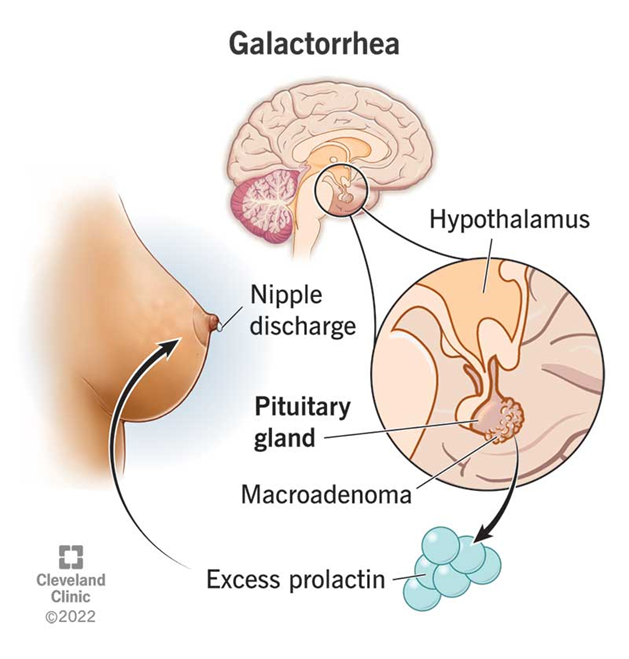
Choice B reason: Gynecomastia, the enlargement of breast tissue in males, can also be a symptom associated with high prolactin levels.
Choice C reason: Social withdrawal is a symptom of Schizophrenia but is not directly related to elevated prolactin levels.
Choice D reason: Apathy can be a symptom of Schizophrenia but is not directly related to elevated prolactin levels.
Choice E reason: Anhedonia is a symptom of Schizophrenia but is not directly related to elevated prolactin levels.
Correct Answer is ["A","C","D","E"]
Explanation
Choice A: The narcotic count is incorrect when the nurse ends the shift
An incorrect narcotic count at the end of a shift is a serious issue that could indicate potential drug diversion. It's crucial for nurses to accurately count and document narcotics to ensure patient safety and maintain legal and ethical standards. Therefore, this behavior should be reported to the nurse manager.
Choice B: The nurse has poor hygiene practices and has an offensive body odor
While poor hygiene and offensive body odor can be disruptive and unpleasant in a workplace setting, they are not direct indicators of substance use disorder. However, it's important to note that changes in personal hygiene can sometimes be a sign of other health or personal issues.
Choice C: The observing nurse finds oral narcotics blister packs torn in the back
Finding torn narcotics blister packs could indicate that a nurse is diverting drugs for personal use. This is a serious violation of nursing practice and should be reported immediately.
Choice D: The clients are reporting a lack of pain control when the nurse is working
If patients consistently report a lack of pain control when a specific nurse is working, it could suggest that the nurse is not administering the prescribed pain medications properly¹?¹?¹?¹?¹?. This could be due to a variety of reasons, including potential drug diversion, and should be reported.
Choice E: The nurse administers narcotics and then goes to use the bathroom
Frequent bathroom breaks immediately after administering narcotics could be a red flag for drug diversion. While there could be other explanations, this behavior in the context of the other signs could indicate a substance use disorder and should be reported.
Whether you are a student looking to ace your exams or a practicing nurse seeking to enhance your expertise , our nursing education contents will empower you with the confidence and competence to make a difference in the lives of patients and become a respected leader in the healthcare field.
Visit Naxlex, invest in your future and unlock endless possibilities with our unparalleled nursing education contents today