
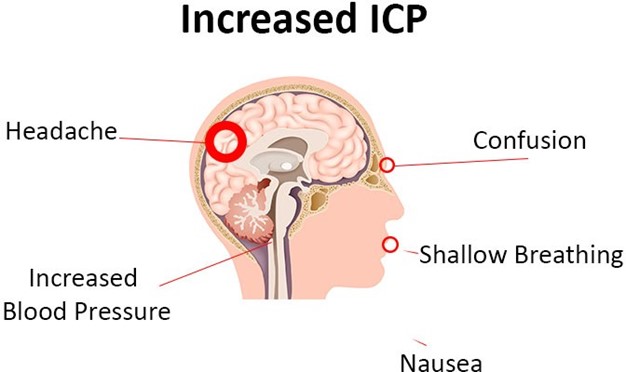
Which of the following is a late sign of intracranial pressure?
Headache
Confusion
Stupor to coma
Weakness
The Correct Answer is C
Choice A: Headache is not a late sign of intracranial pressure, but rather an early sign of increased pressure or irritation of the meninges.
Choice B: Confusion is not a late sign of intracranial pressure, but rather an early sign of impaired cognition or orientation.
Choice C: Stupor to coma is a late sign of intracranial pressure, as it indicates a severe deterioration of consciousness or brain function.
Choice D: Weakness is not a late sign of intracranial pressure, but rather a sign of focal neurological deficit or hemiparesis.

Nursing Test Bank
Naxlex Comprehensive Predictor Exams
Related Questions
Correct Answer is A
Explanation
Choice A: Thickened liquids or pureed diet is correct because it can prevent aspiration, choking, or malnutrition in stroke patients. A stroke can impair the patient's ability to swallow, chew, or control their tongue and mouth movements. This can cause food or liquids to enter the airway instead of the esophagus, leading to pneumonia or death. A thickened liquid or pureed diet consists of foods that are smooth, soft, and easy to swallow. The nurse should assess the patient's swallowing function and provide appropriate food and drink consistency.
Choice B: Regular diet is incorrect because it can be unsafe or unsuitable for stroke patients. A regular diet consists of foods that are solid, crunchy, or sticky and require normal chewing and swallowing abilities. The nurse should not give a regular diet to a stroke patient unless they have passed a swallowing evaluation and have no signs of dysphagia.
Choice C: Renal diet is incorrect because it is not specific to stroke patients. A renal diet is designed for patients with kidney disease or failure. It limits the intake of sodium, potassium, phosphorus, and protein to reduce the workload and waste products of the kidneys. The nurse should not give a renal diet to a stroke patient unless they also have a kidney condition and a doctor's order.
Choice D: Cardiac diet is incorrect because it is not specific to stroke patients. A cardiac diet is designed for patients with heart disease or risk factors. It limits the intake of saturated fat, cholesterol, sodium, and sugar to lower the blood pressure and cholesterol levels and prevent further damage to the heart. The nurse should not give a cardiac diet to a stroke patient unless they also have a heart condition and a doctor's order.
Correct Answer is D
Explanation
Choice A: Flaccidity is not an early sign of intracranial pressure, but rather a late sign of brainstem compression or damage.
Choice B: Projectile vomiting is not an early sign of intracranial pressure, but rather a sign of increased pressure in the posterior fossa or cerebellum.
Choice C: Stupor is not an early sign of intracranial pressure, but rather a sign of severe impairment of consciousness or coma.
Choice D: Changes in level of consciousness is an early sign of intracranial pressure, as it reflects the brain's response to decreased oxygen and increased pressure.
Whether you are a student looking to ace your exams or a practicing nurse seeking to enhance your expertise , our nursing education contents will empower you with the confidence and competence to make a difference in the lives of patients and become a respected leader in the healthcare field.
Visit Naxlex, invest in your future and unlock endless possibilities with our unparalleled nursing education contents today