
What is Wernicke-Korsakoff syndrome?
A neurological disorder caused by a lack of thiamine (vitamin B1).
A psychological condition related to stress.
A genetic disorder affecting memory.
An infectious disease affecting the brain.
The Correct Answer is A
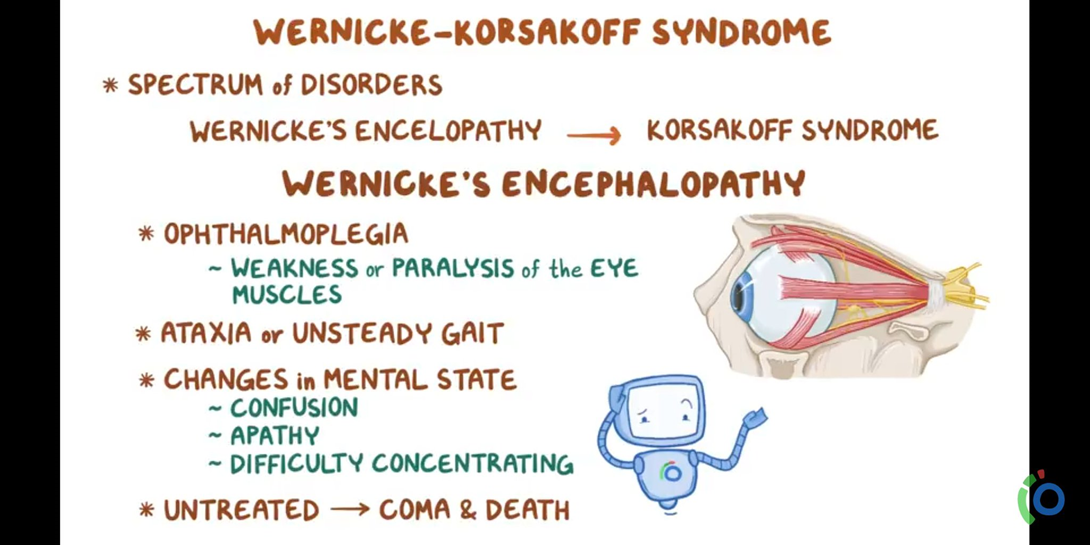
Choice A reason: Wernicke-Korsakoff syndrome is a brain and memory disorder that requires immediate treatment. It occurs due to a severe deficiency of thiamine (vitamin B1), which is essential for the brain to convert food into energy.
Choice B reason: There is no evidence suggesting that Wernicke-Korsakoff syndrome is a psychological condition related to stress.
Choice C reason: Wernicke-Korsakoff syndrome is not a genetic disorder; it is caused by a deficiency of vitamin B1, often associated with alcohol abuse or malnutrition.
Choice D reason: It is not an infectious disease; Wernicke-Korsakoff syndrome results from nutritional deficiencies, specifically a lack of thiamine (vitamin B1).
Nursing Test Bank
Naxlex Comprehensive Predictor Exams
Related Questions
Correct Answer is ["A","D","E"]
Explanation
Choice A reason: A matter-of-fact approach is effective for clients with schizotypal personality disorder as it helps in dealing with their eccentric behaviors and distorted thinking without reinforcing their odd beliefs.
Choice B reason: Clients with avoidant personality disorder may benefit more from a supportive and encouraging approach due to their sensitivity to rejection and feelings of inadequacy.
Choice C reason: For narcissistic personality disorder, a matter-of-fact approach might not be as effective because these clients often require admiration and may not respond well to a straightforward style.
Choice D reason: An antisocial personality disorder client may respond better to a matter-of-fact approach as it sets clear boundaries and expectations without emotional engagement, which they may exploit.
Choice E reason: Paranoid personality disorder clients may find a matter-of-fact approach beneficial as it provides clear and direct communication, which can help reduce their suspicions.
Correct Answer is C
Explanation
Choice A reason: Focusing conversations on nutritious food can be positive, but it does not directly indicate a change in behavior related to bulimia nervosa.
Choice B reason: Gaining weight may be a positive sign, but it is not sufficient on its own to indicate a behavioral change, as weight can fluctuate for various reasons.
Choice C reason: Demonstrating healthy coping mechanisms that decrease anxiety is a strong indicator of positive behavioral change in a client with bulimia nervosa, as it suggests the client is developing strategies to manage the disorder.
Choice D reason: While verbalizing an understanding of the disorder's etiology is beneficial, it does not necessarily reflect a change in behavior.
Whether you are a student looking to ace your exams or a practicing nurse seeking to enhance your expertise , our nursing education contents will empower you with the confidence and competence to make a difference in the lives of patients and become a respected leader in the healthcare field.
Visit Naxlex, invest in your future and unlock endless possibilities with our unparalleled nursing education contents today