
The nurse will be assisting the client to walk. What should the nurse do first?
Assist the client to a sitting position at the side of the bed
Determine the client's strength, coordination, and activity tolerance
Help the client into a standing position
Ask another nurse for assistance
The Correct Answer is B
B. Such an assessment helps in determining the level of assistance the client will need and ensures the safety of both the client and the nurse.
A. Helping the client to sit at the edge of the bed allows them to acclimate to being upright, assess their readiness to stand, and ensures their safety before attempting to walk. However, it is not the priority.
C. After assisting the client to a sitting position at the edge of the bed and assessing their readiness, the nurse can proceed to help the client into a standing position. However, it is not the priority.
D. This option may be necessary if the client requires two-person assistance due to their condition, mobility status, or safety concerns. However, asking for assistance typically comes after assessing the client's readiness and ensuring they are positioned correctly for ambulation.
Nursing Test Bank
Naxlex Comprehensive Predictor Exams
Related Questions
Correct Answer is D
Explanation
D. Metabolic alkalosis is characterized by an increased pH (alkalosis) and an increased HCO3. In this case, the pH is elevated (7.5), indicating alkalosis, which supports metabolic alkalosis. The HCO3 is elevated at 40 mEq/L, which further supports metabolic alkalosis. The PaCO2 is normal or slightly low (36 mmHg), which can occur as a compensatory response to metabolic alkalosis.
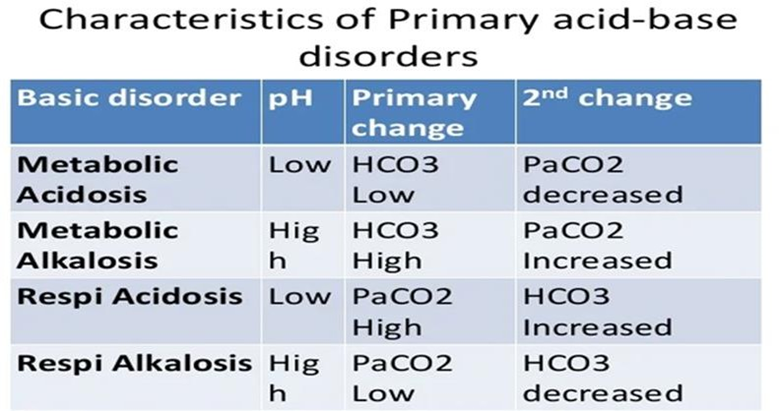
A. Respiratory alkalosis is characterized by an increase in pH (alkalosis) and a decrease in PaCO2 (hypocapnia). In this scenario, the pH is elevated (7.5), which indicates alkalosis. The PaCO2 is 36 mmHg, which is within the normal range (35-45 mmHg) but slightly on the lower side (slight hypocapnia). The HCO3 is elevated at 40 mEq/L, which suggests a compensatory response by the kidneys to retain bicarbonate to counteract the alkalosis.
B. Respiratory acidosis is characterized by a decrease in pH (acidosis) and an increase in PaCO2 (hypercapnia). In this case, the pH is elevated (7.5), indicating alkalosis, which contradicts respiratory acidosis. The PaCO2 is 36 mmHg, which is normal or slightly low, not high as expected in respiratory acidosis. The elevated HCO3 (40 mEq/L) suggests a compensatory metabolic response to the alkalosis, not to acidosis.
C. Metabolic acidosis is characterized by a decreased pH (acidosis) and a decreased HCO3. In this scenario, the pH is elevated (7.5), indicating alkalosis, which contradicts metabolic acidosis. The HCO3 is elevated at 40 mEq/L, indicating metabolic alkalosis rather than metabolic acidosis.
Correct Answer is A
Explanation
A. Negligence in nursing refers to the failure to provide care that meets established standards, resulting in harm to the patient. In this case, if the nurse failed to monitor vital signs as per hospital policies and this failure led to complications for the post-operative client, it could constitute negligence. Negligence involves breaching the duty of care owed to the patient, causing harm that could have been reasonably prevented.
B. Nonmaleficence is the principle of doing no harm. While it is an ethical principle guiding healthcare practice, it does not justify or excuse negligence. Negligence involves a failure to uphold the duty of care owed to the patient, resulting in harm due to substandard practice.
C. A misdemeanor typically refers to a lesser criminal offense. Negligence in healthcare generally does not rise to the level of a criminal offense like a misdemeanor unless there is gross negligence or willful misconduct. In most cases, negligence leading to harm is addressed through civil litigation rather than criminal charges.
D. While negligence can certainly be considered unethical behavior in the context of healthcare, negligence itself is a legal concept related to professional malpractice rather than solely an ethical breach. Ethical violations may involve different aspects of professional conduct not directly related to negligence, such as breaches of confidentiality or conflicts of interest.
Whether you are a student looking to ace your exams or a practicing nurse seeking to enhance your expertise , our nursing education contents will empower you with the confidence and competence to make a difference in the lives of patients and become a respected leader in the healthcare field.
Visit Naxlex, invest in your future and unlock endless possibilities with our unparalleled nursing education contents today