
A client is prescribed a cleansing enema. Prior to administering the enema, the client should be told to:
drink a full glass of water.
hold the solution for a couple of minutes.
take fast breaths through the nose.
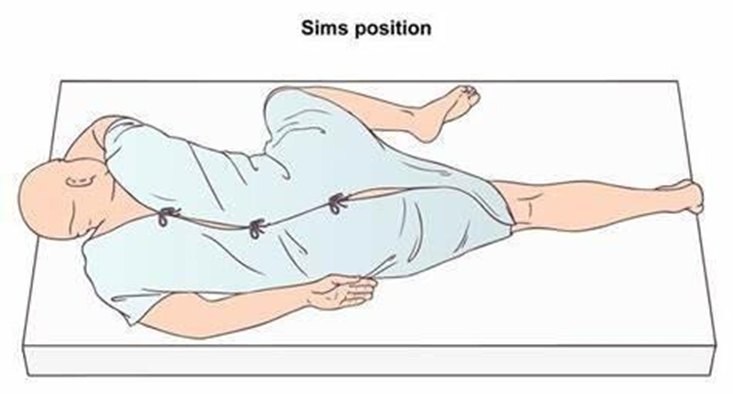
lie on the left side with the right knee bent
The Correct Answer is D
D. Before administering a cleansing enema, the client is typically instructed to assume a left-side lying position with the right knee bent. This position helps to facilitate the flow of the enema solution into the colon and allows for better retention of the solution. It also helps to prevent leakage and discomfort during the procedure.
A. Drinking water before administering an enema can help hydrate the client and promote normal bowel function. However, it is not typically a specific instruction related to the administration of the enema itself. Hydration is generally beneficial for bowel health but is not directly related to the enema procedure.
B. After administering the enema solution, the client should be instructed to hold the solution in the bowel for a sufficient amount of time to allow it to soften and loosen stool. The exact duration can vary based on the type and purpose of the enema, but typically, the client is encouraged to retain the solution for a specified period (as instructed by the healthcare provider) before evacuating.
C. This instruction is unrelated to the administration of a cleansing enema. Breathing techniques may be taught for relaxation or to manage discomfort during procedures, but they do not specifically apply to the process of administering an enema.
Nursing Test Bank
Naxlex Comprehensive Predictor Exams
Related Questions
Correct Answer is D
Explanation
D. When uncertain about the endpoint of Korotkoff sounds, releasing the cuff completely allows the blood flow to return to normal in the arm. After waiting for about two minutes, the nurse can reinflate the cuff and begin the measurement process again. This approach helps ensure accurate measurement by resetting conditions and allowing for a clearer determination of when Korotkoff sounds start and stop.
A. This option is not recommended because re-inflating the cuff immediately could lead to incorrect readings due to inaccurate pressure settings or discomfort for the client. It does not address the issue of determining the endpoint of the Korotkoff sounds.
B. This technique involves palpating the radial pulse while inflating the cuff and then inflating the cuff until the pulse is no longer palpable. This method can help ensure the cuff is inflated to an appropriate pressure level, which is typically about 30 mmHg above the point where the radial pulse disappears.
However, this option does not directly address the uncertainty about when to listen for the Korotkoff sounds to stop.
C. This option is not practical for addressing the immediate uncertainty during the current blood pressure measurement. Waiting 30 minutes to retake the blood pressure with a different cuff may delay necessary assessment and intervention.
Correct Answer is D
Explanation
D. These effects are not the primary intended outcomes of the medication, but are known possible reactions that can occur in addition to the main therapeutic effect.
A. Synergistic effects refer to the combined action of two or more substances or medications that results in an effect greater than the sum of their individual effects.
B. Adverse effects are unintended and potentially harmful effects of a medication, even when the medication is used at therapeutic doses and in the correct manner.
C. Therapeutic effects are the desired and beneficial effects of a medication that contribute to treating or managing a medical condition. These effects are intended and typically guide the prescribing and administration of medications.
Whether you are a student looking to ace your exams or a practicing nurse seeking to enhance your expertise , our nursing education contents will empower you with the confidence and competence to make a difference in the lives of patients and become a respected leader in the healthcare field.
Visit Naxlex, invest in your future and unlock endless possibilities with our unparalleled nursing education contents today