
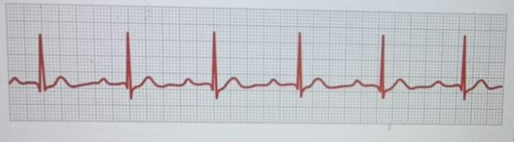
The nurse who is working in the telemetry unit measures the PR interval of the client's rhythm strip depicted below. What is the nurse's analysis of the PR interval?
Atria is taking longer to depolarize and contract
Conduction time is slowed from the SA node to the ventricles
The PR interval is within the normal time limits
Ventricular repolarization is delayed
The Correct Answer is C
A. Atria is taking longer to depolarize and contract: This would be indicated by a prolonged or abnormal P wave, not a normal PR interval. The rhythm strip shows clearly visible, normal-appearing P waves followed by QRS complexes, ruling this out as the correct interpretation.
B. Conduction time is slowed from the SA node to the ventricles: A slowed conduction time would result in a PR interval longer than 0.20 seconds, characteristic of first-degree AV block. The PR interval on this strip measures within the standard range (0.12–0.20 seconds), so this is not accurate.
C. The PR interval is within the normal time limits: The PR interval on the ECG strip spans about 3 to 4 small boxes (0.12–0.16 seconds), which is within the normal range of 0.12 to 0.20 seconds. This indicates normal conduction from the atria through the AV node to the ventricles.
D. Ventricular repolarization is delayed: Delayed ventricular repolarization refers to a prolonged QT interval, not an abnormality in the PR interval. The PR interval evaluates atrial conduction, not ventricular repolarization, so this is an incorrect association.
Nursing Test Bank
Naxlex Comprehensive Predictor Exams
Related Questions
Correct Answer is A
Explanation
A. vegetative embolization to the kidneys: Infective endocarditis is an infection of the heart valves or the endocardium. Vegetations (clumps of bacteria, fibrin, and platelets) can form on the damaged heart structures. These vegetations are fragile and can break off, forming emboli that travel through the bloodstream to various organs. Embolization to the kidneys can cause renal infarction, leading to sharp flank pain due to ischemia or infarction of kidney tissue and hematuria.
B. hemolysis of red blood cells by hemolytic microorganisms: While some bacteria can cause hemolysis, it is not typically associated with localized flank pain. Hemolysis would present with systemic signs such as jaundice, fatigue, and anemia, not acute flank pain and visible hematuria.
C. septicemia resulting in decreased glomerular blood flow: Septicemia may impair renal perfusion over time but would more likely lead to generalized signs of acute kidney injury, such as oliguria and rising creatinine levels, rather than acute flank pain and hematuria.
D. bacterial infection in the kidneys: Acute pyelonephritis can cause flank pain and hematuria, but in the context of infective endocarditis, embolic events are a more likely and urgent explanation for new-onset symptoms, particularly sharp localized pain.
Correct Answer is C
Explanation
A. Increase in systolic blood pressure 10 mmHg above client's norm: A mild increase in systolic blood pressure is not a specific indicator of mitral stenosis progression. Blood pressure fluctuations may occur due to various factors and are not typically used as a primary marker of worsening valve disease.
B. reports dyspnea after walking up 2 flights of stairs: Exertional dyspnea is a common early symptom of mitral stenosis due to reduced left atrial emptying and pulmonary congestion. However, this does not necessarily indicate worsening unless the symptom becomes more severe or occurs with minimal exertion.
C. Jugular vein distention and +3 peripheral edema: These are signs of right-sided heart failure, which may result from long-standing mitral stenosis leading to pulmonary hypertension and subsequent right ventricular hypertrophy and failure. This indicates disease progression and worsening cardiac function.
D. Complaints of epigastric pain after eating a large meal: Epigastric discomfort is not a typical symptom of mitral stenosis and is more likely related to gastrointestinal issues. It does not reflect the status or progression of the cardiac condition.
Whether you are a student looking to ace your exams or a practicing nurse seeking to enhance your expertise , our nursing education contents will empower you with the confidence and competence to make a difference in the lives of patients and become a respected leader in the healthcare field.
Visit Naxlex, invest in your future and unlock endless possibilities with our unparalleled nursing education contents today