
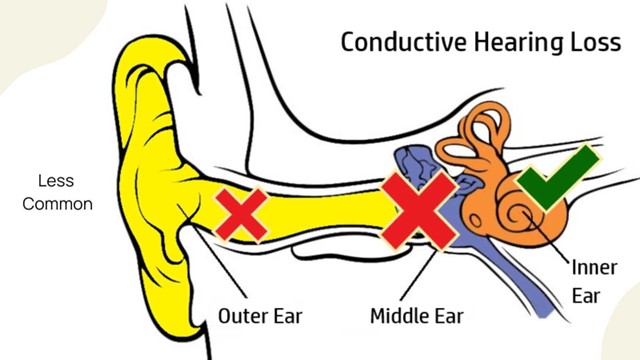
The nurse is caring for a client experiencing hearing loss. The nurse uses the otoscope and notes a significant accumulation of cerumen. Which hearing loss type would be most accurate?
Sensorineural.
Mixed.
Central.
Conductive.
The Correct Answer is D
Conductive hearing loss occurs when there is a blockage or damage in the outer or middle ear, which prevents sound from reaching the inner ear. The accumulation of cerumen in the ear canal can cause conductive hearing loss. Sensorineural hearing loss occurs due to damage to the inner ear or auditory nerve, while mixed hearing loss is a combination of both conductive and sensorineural hearing loss. Central hearing loss occurs due to damage in the central nervous system and is not related to cerumen buildup in the ear canal.
Nursing Test Bank
Naxlex Comprehensive Predictor Exams
Related Questions
Correct Answer is B
Explanation
Inspection, followed by Auscultation, Percussion, and Palpation. Inspection assesses for abdominal contour, symmetry, any visible masses, scars or other abnormalities. Auscultation assesses bowel sounds, and Percussion assesses for any areas of tenderness, and to determine the presence of fluid, gas or masses. Palpation assesses for any masses, areas of tenderness, organ size or other abnormalities. This is the order that allows the nurse to assess the abdomen systematically and accurately.
A: Palpation comes last because it can stimulate bowel sounds, which can make the nurse miss some of the sounds while auscultating.
C: Auscultation must be done before percussion and palpation to prevent altering bowel sounds.
D: Percussion comes before palpation to avoid altering the underlying structures of the abdomen.
Correct Answer is B
Explanation
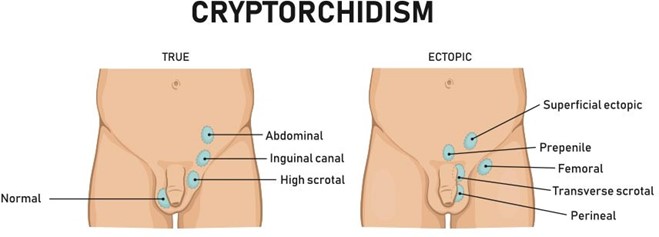
The assessment finding that is most important in determining which client has a higher risk for testicular cancer is cryptorchidism as an infant. Cryptorchidism, or undescended testicle(s), is a condition where one or both testicles fail to move from the abdomen into the scrotum before birth. Males with cryptorchidism are many times more likely to get testicular cancer than those with normally descended testicles. Cryptorchidism is the main risk factor for testicular cancer, while other factors such as previous STI, low sperm count, and family history of cancer are less clear or less common
Whether you are a student looking to ace your exams or a practicing nurse seeking to enhance your expertise , our nursing education contents will empower you with the confidence and competence to make a difference in the lives of patients and become a respected leader in the healthcare field.
Visit Naxlex, invest in your future and unlock endless possibilities with our unparalleled nursing education contents today