
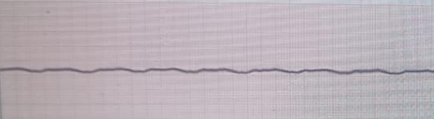
The nurse is caring for a client during a cardiac arrest. The monitor displays the rhythm below. Which intervention should the nurse perform at this time?
Administer amiodarone 200 mg IV push
Defibrillate the client using 200 joules
CPR until the physician stops the code
Administer adenosine 12 mg IV push
The Correct Answer is C
A. Administer amiodarone 200 mg IV push: Amiodarone is used for shockable rhythms like ventricular fibrillation (VF) or pulseless ventricular tachycardia (VT) that are refractory to defibrillation. The rhythm on the monitor is asystole, which is non-shockable, and amiodarone is not indicated here.
B. Defibrillate the client using 200 joules: Defibrillation is only appropriate for shockable rhythms such as VF or pulseless VT. Asystole is not shockable, and defibrillation in this rhythm would be ineffective and inappropriate.
C. CPR until the physician stops the code: The rhythm strip shows asystole, a flatline with no electrical activity. The priority intervention is to initiate and continue high-quality cardiopulmonary resuscitation (CPR) immediately and continue until the code is terminated by the physician. This is consistent with Advanced Cardiac Life Support (ACLS) guidelines.
D. Administer adenosine 12 mg IV push: Adenosine is used to terminate supraventricular tachycardia (SVT) and is not indicated in asystole or during cardiac arrest. It would have no effect in a rhythm with no electrical activity.
Nursing Test Bank
Naxlex Comprehensive Predictor Exams
Related Questions
Correct Answer is D
Explanation
A. Maintain the infusion because the client had a cardiac arrest: While epinephrine is essential during cardiac arrest, continuing a high-dose infusion post-resuscitation without reassessment may lead to complications like tachycardia, hypertension, and increased myocardial oxygen demand.
B. Continue to monitor the client's rhythm closely: Ongoing monitoring is important, but it is a passive intervention. The heart rate of 120 bpm may reflect excessive adrenergic stimulation from epinephrine, and further action is needed to prevent deterioration.
C. Suggest that the client's medication be changed to norepinephrine: Norepinephrine is another vasopressor that has less of a beta-1 adrenergic effect compared to epinephrine. It is primarily used for hypotension and septic shock, not as a direct substitute for epinephrine post-cardiac arrest. Changing to another vasopressor without indication is not the best initial step.
D. Ask the physician if the dose can be decreased: A heart rate of 120 bpm may indicate that the epinephrine dose is too high, causing sympathetic overstimulation. Prolonged or excessive tachycardia increases myocardial oxygen demand, which can be detrimental, especially in a post-arrest heart. Decreasing the dose can help prevent arrhythmias or myocardial ischemia, making this the most appropriate and proactive action.
Correct Answer is B
Explanation
A. Breast cancer treated with chemotherapy and radiation: While cancer and its treatments can suppress the immune system, they are not direct causes of infectious endocarditis. The condition is more closely related to bacteremia and structural heart damage.
B. Periodontal disease and gum surgery three months ago: Periodontal disease involves chronic bacterial infection of the gums and supporting structures of the teeth, this transient bacteremia can lead to infectious endocarditis. Oral infections and invasive dental procedures can introduce bacteria into the bloodstream, particularly streptococci, which can colonize damaged heart valves and cause infectious endocarditis.
C. Type II diabetic for ten years: Diabetes increases the risk of infection generally, but it is not a specific cause of endocarditis. Without a portal of entry or bacteremia, the condition alone is not strongly associated with endocarditis.
D. Myocardial infarction one year ago: A prior MI may result in reduced cardiac function but does not directly lead to infectious endocarditis unless it has resulted in damaged valves or introduced infection, which is not indicated here.
Whether you are a student looking to ace your exams or a practicing nurse seeking to enhance your expertise , our nursing education contents will empower you with the confidence and competence to make a difference in the lives of patients and become a respected leader in the healthcare field.
Visit Naxlex, invest in your future and unlock endless possibilities with our unparalleled nursing education contents today