
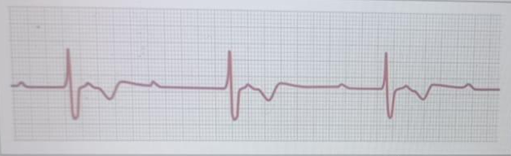
The nurse identifies the following rhythm on the cardiac monitor. Which treatment modality will the nurse anticipate for this client?
Radiofrequency ablation
Administration of amiodarone
insertion of a pacemaker
Administration of adenosine
The Correct Answer is C
A. Radiofrequency ablation: This is used to treat tachyarrhythmias such as atrial fibrillation, atrial flutter, or supraventricular tachycardia (SVT). The ECG shown does not demonstrate any tachycardic rhythm rather, it shows a bradyarrhythmia with dropped QRS complexes, which suggests a conduction block, not a reentrant circuit.
B. Administration of amiodarone: Amiodarone is primarily used for ventricular arrhythmias or atrial fibrillation. It is not effective in treating bradyarrhythmias or heart blocks such as those seen in this rhythm strip.
C. Insertion of a pacemaker: The rhythm strip shows intermittent dropped QRS complexes with consistent P waves—this is indicative of second-degree AV block, Mobitz II. This type of conduction block can progress to complete heart block and is often treated with the insertion of a permanent pacemaker to maintain cardiac output.
D. Administration of adenosine: Adenosine is used to terminate SVT by temporarily blocking AV node conduction. It is contraindicated in heart blocks, especially Mobitz II or third-degree AV block, because it can worsen the block and cause asystole.
Nursing Test Bank
Naxlex Comprehensive Predictor Exams
Related Questions
Correct Answer is A
Explanation
A. Dehydration: The elevated hemoglobin (17 g/dL) and hematocrit (54%), along with an increased BUN (28 mg/dL) and normal creatinine, suggest hemoconcentration, a key indicator of dehydration. Small bowel obstruction often leads to fluid loss through vomiting and third spacing into the bowel, contributing to this condition.
B. Infection: The WBC count is normal at 8.5, which does not support an active infection. Infections typically result in leukocytosis (WBC >10.5), especially in acute abdominal conditions.
C. Renal insufficiency: Although BUN is elevated, creatinine remains normal (1.1 mg/dL). This pattern, particularly with hemoconcentration, supports pre-renal azotemia due to dehydration, not intrinsic renal insufficiency.
D. Internal bleeding: Internal bleeding typically causes a decrease in hemoglobin and hematocrit due to blood loss. The elevated values in this case rule out active bleeding and instead indicate fluid volume deficit.
Correct Answer is C
Explanation
A. gabapentin & acetaminophen: While acetaminophen may help with pain relief, gabapentin is primarily used for neuropathic pain and not effective for the inflammatory chest pain associated with pericarditis. These medications do not address the positional nature of pericardial pain.
B. extended release opioids: Opioids may provide general pain relief but are not the standard treatment for pericarditis-related pain. They do not address the inflammatory cause and carry risks of sedation and respiratory depression without improving cardiac inflammation.
C. sitting & leaning forward: Pericarditis pain is classically relieved by having the patient sit up and lean forward. This position reduces pressure on the pericardium and decreases pain by allowing the inflamed pericardial layers to separate slightly, reducing friction.
D. supine with head of bed 15 degrees: Lying flat or even slightly elevated can worsen pericarditis pain because it increases pressure on the inflamed pericardium. Patients often report increased discomfort in the supine position, making it less favorable for symptom relief.
Whether you are a student looking to ace your exams or a practicing nurse seeking to enhance your expertise , our nursing education contents will empower you with the confidence and competence to make a difference in the lives of patients and become a respected leader in the healthcare field.
Visit Naxlex, invest in your future and unlock endless possibilities with our unparalleled nursing education contents today