
The nurse assesses the initial lochia post-delivery which is known as:
Rubra.
Fontanalis.
Serosa.
Alba.
The Correct Answer is A
The initial lochia post-delivery is known as lochia rubra.
Lochia is the vaginal discharge that occurs after childbirth and consists of blood, mucus, uterine tissue, and other materials from the uterus.
There are three stages of lochia: lochia rubra, lochia serosa, and lochia alba.
Lochia rubra is dark or bright red in color and lasts for about three to four days after delivery.
Choice B is not an answer because Fontanalis is not a term related to lochia.
Choice C is not an answer because lochia serosa is the second stage of lochia and occurs after lochia rubra.
Choice D is not an answer because lochia alba is the last stage of lochia and occurs after lochia serosa.
Nursing Test Bank
Naxlex Comprehensive Predictor Exams
Related Questions
Correct Answer is C
Explanation
A child with autism spectrum disorder may have problems with social communication and interaction, including ignoring a caregiver who offers them a snack.
Choice A is incorrect because crying and stomping feet after another child takes a toy is normal behavior for a 2- or 3-year-old child.
Choice B is incorrect because repeating an action over and over is not necessarily indicative of autism spectrum disorder.
Choice D is incorrect because flipping a light switch off and on until asked to stop and join other children in playing is not necessarily indicative of autism spectrum disorder.

Correct Answer is D
Explanation
Compartment syndrome is a condition where increased pressure within a muscle compartment causes muscle and nerve damage along with pain.
One of the symptoms of compartment syndrome is severe pain that increases with the stretching of muscles.
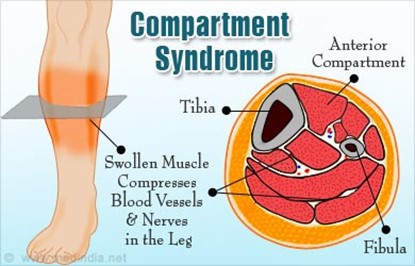
Choice A is not correct because blue-looking nail beds on the toes are not a symptom of compartment syndrome.
Choice B is not correct because a weak femoral pulse is not a symptom of compartment syndrome.
Choice C is not correct because the inability to plantarflex the foot is not a symptom of compartment syndrome.
Whether you are a student looking to ace your exams or a practicing nurse seeking to enhance your expertise , our nursing education contents will empower you with the confidence and competence to make a difference in the lives of patients and become a respected leader in the healthcare field.
Visit Naxlex, invest in your future and unlock endless possibilities with our unparalleled nursing education contents today