
On discharge, a client who underwent left modified radical mastectomy expresses relief that -the cancer- has been treed. When discharged, which is the best recommendation?
should continue to perform breast self-examination on her right breast.
Is lucky that the cancer was caught in time.
should schedule a follow-up appointment in 6 months.
I have irregular menses
The Correct Answer is A
Breast self-examination is an essential part of breast cancer detection and should be performed regularly by all women, regardless of their medical history. While the client may have undergone a left modified radical mastectomy, this does not eliminate the possibility of developing breast cancer in the right breast or other parts of the body. Therefore, it is essential to continue performing breast self-examination regularly to detect any changes that may occur in the right breast.
Option b, "Is lucky that the cancer was caught in time" and option c, "should schedule a follow- up appointment in 6 months" may also be appropriate responses depending on the client's specific situation but option a is the most universally applicable response.
Option d, "I have irregular menses" is unrelated to the topic and does not address the client's
concern or needs.
Nursing Test Bank
Naxlex Comprehensive Predictor Exams
Related Questions
Correct Answer is B
Explanation
Endometriosis is a condition in which tissue like the lining of the uterus grows outside of the uterus, causing pain and discomfort. Acute pain is a common symptom of endometriosis and can be severe enough to interfere with daily activities and quality of life. Therefore, pain management should be a priority in the care of clients with endometriosis.
While anxiety related to risk of transmission (option a) and excess fluid volume related to abdominal distention (option d) may also be concerns for some clients with endometriosis, they are generally not the most urgent priorities. Ineffective tissue perfusion related to hemorrhage (option c) may be a concern in rare cases of severe endometriosis, but it is not a common or typical complication.
Correct Answer is D
Explanation
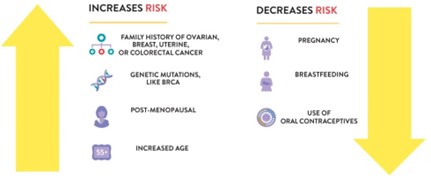
Ovarian cancer risk is increased in women who have not been pregnant, have a family history of ovarian cancer, have a personal history of breast or colon cancer, and have inherited gene mutations such as BRCA1 and BRCA2.
Hormonal contraceptives, having children, and the age at which a woman had her first child have been associated with a reduced risk of ovarian cancer. However, these factors do not completely eliminate the risk. It is still possible for women taking hormonal contraceptives, women who have had children, and women who had their first child at an early age to develop ovarian cancer
.
Whether you are a student looking to ace your exams or a practicing nurse seeking to enhance your expertise , our nursing education contents will empower you with the confidence and competence to make a difference in the lives of patients and become a respected leader in the healthcare field.
Visit Naxlex, invest in your future and unlock endless possibilities with our unparalleled nursing education contents today