
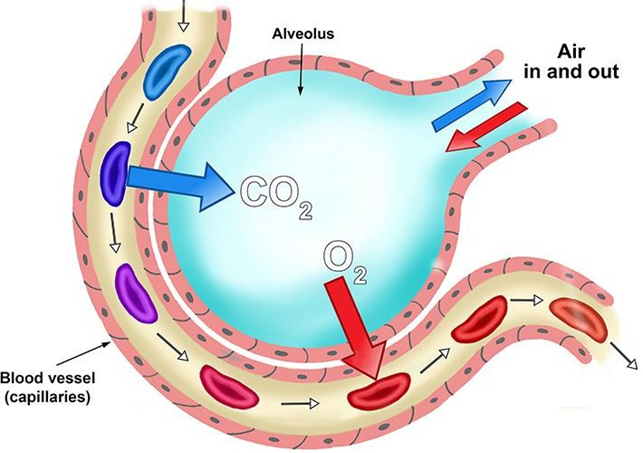
Gas exchange occurs in which of the following structures?
bronchi
alveoli
nasal passages
larynx
The Correct Answer is B
B. The alveoli are tiny air sacs within the lungs where gas exchange occurs. Oxygen from inhaled air diffuses across the thin walls of the alveoli into the bloodstream, while carbon dioxide moves from the bloodstream into the alveoli to be exhaled.
A. The bronchi are the main airways that branch off from the trachea and lead to the lungs. While the bronchi play a crucial role in conducting air to and from the lungs, gas exchange does not occur in the bronchi themselves.
C. The nasal passages, also known as the nostrils or nares, are the passages through which air enters the respiratory system. While the nasal passages warm, humidify, and filter the air as it enters the body, gas exchange does not occur in this area.
D. The larynx, or voice box, is located at the top of the trachea and is involved in breathing, swallowing, and vocalization. However, gas exchange does not occur in the larynx.
Nursing Test Bank
Naxlex Comprehensive Predictor Exams
Related Questions
Correct Answer is D
Explanation
D. Restlessness can be an early sign of hypoxia. Chest wall movement provides information about the effort and effectiveness of breathing, and the color of the nails can indicate cyanosis, which is a sign of poor oxygenation. These data points are directly related to assessing respiratory status and the severity of pneumonia.
A. Hiccups, sweating, and blood pressure can provide useful information about the patient's condition, they do not directly indicate the severity of respiratory distress or oxygenation status. Hiccups can be a sign of diaphragmatic irritation, sweating can indicate fever or infection, and blood pressure is a general vital sign but not specific to respiratory function.
B. Capillary refill can provide information about peripheral perfusion, and the amount of sputum can be relevant to respiratory status, particularly in an infection like pneumonia. Trembling might indicate fever or anxiety but is less directly related to respiratory status compared to other signs.
C. Pupil size and sneezing are not directly related to respiratory function in pneumonia. Pain location could be relevant if it indicates pleuritic pain, but this set of data does not provide the most critical information for assessing respiratory function and oxygenation in a patient with pneumonia.
Correct Answer is A
Explanation
A. Chocolate contains caffeine and cocoa, both of which can relax the lower esophageal sphincter (LES) and increase the risk of acid reflux. Additionally, chocolate is high in fat, which can further exacerbate symptoms of GERD. Therefore, chocolate is often recommended to be avoided by individuals with GERD.
B. Oatmeal is generally considered a bland and low-acid food that is unlikely to trigger symptoms of GERD. In fact, oatmeal is often recommended as part of a GERD-friendly diet due to its high fiber content, which can help absorb stomach acid and promote digestive health.
C. Apples are generally considered to be low in acid and high in fiber, making them a relatively safe fruit choice for individuals with GERD. However, some individuals may find that certain varieties of apples or apple products (such as apple juice) can exacerbate their GERD symptoms.
D. Nonfat milk is generally considered to be a low-fat and low-acid beverage that is unlikely to trigger symptoms of GERD. However, some individuals may find that consuming dairy products, including milk, can exacerbate their GERD symptoms.
Whether you are a student looking to ace your exams or a practicing nurse seeking to enhance your expertise , our nursing education contents will empower you with the confidence and competence to make a difference in the lives of patients and become a respected leader in the healthcare field.
Visit Naxlex, invest in your future and unlock endless possibilities with our unparalleled nursing education contents today