
A postoperative patient is diagnosed with fluid volume overload. What should the nurse expect to assess in this patient?
Concentrated hemoglobin and hematocrit levels
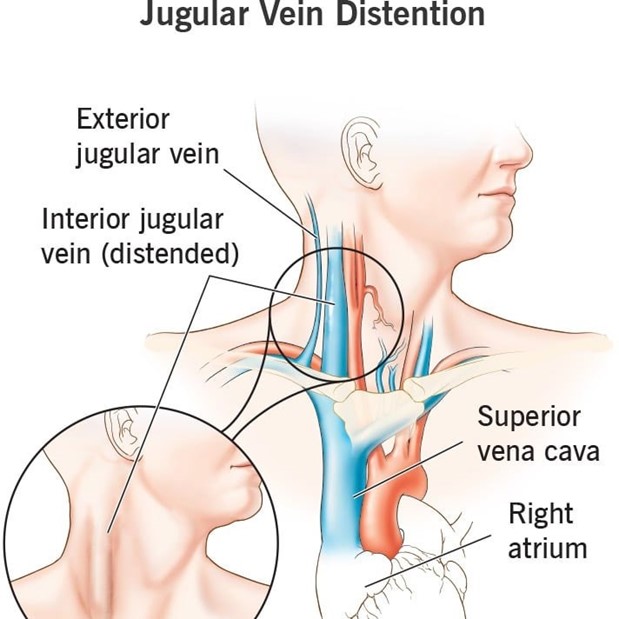
Distended neck veins
Decreased urine output
Poor skin turgor
The Correct Answer is B
Choice A: Concentrated hemoglobin and hematocrit levels are not a sign of fluid volume overload, but rather of fluid volume deficit. This is a condition that occurs when the body loses more fluid than it gains. This can happen in patients who have excessive bleeding, vomiting, diarrhea, or diaphoresis. Concentrated hemoglobin and hematocrit levels indicate hemoconcentration, which is an increase in the ratio of blood cells to plasma.
Choice B: Distended neck veins are a sign of fluid volume overload, because this condition occurs when the body retains more fluid than it excretes. This can happen in patients who have heart failure, kidney failure, or excessive fluid intake. Distended neck veins indicate increased central venous pressure, which is a measure of the pressure in the right atrium of the heart.
Choice C: Decreased urine output is not a sign of fluid volume overload, but rather of oliguria or anuria. These are conditions that occur when the urine output is less than 400 mL or 50 mL per day, respectively. These can happen in patients who have acute or chronic kidney injury, urinary obstruction, or shock. Decreased urine output indicates impaired renal function and decreased glomerular filtration rate.
Choice D: Poor skin turgor is not a sign of fluid volume overload, but rather of dehydration. This is a condition that occurs when the body loses more water than it gains. This can happen in patients who have fever, diabetes insipidus, or hyperglycemia. Poor skin turgor indicates decreased skin elasticity and delayed return to normal shape after being pinched.
Nursing Test Bank
Naxlex Comprehensive Predictor Exams
Related Questions
Correct Answer is A
Explanation
Choice A Reason: This is correct because almonds are a rich source of magnesium, which is a mineral that is essential for nerve and muscle function, blood pressure regulation, and bone health. A serum magnesium level of 1.4 mg/dL indicates hypomagnesemia, which is a low level of magnesium in the blood. Hypomagnesemia can cause muscle weakness, cramps, tremors, seizures, and cardiac arrhythmias. The nurse should encourage the patient to eat foods high in magnesium, such as almonds, which contain about 80 mg of magnesium per ounce.
Choice B Reason: This is incorrect because white rice is a poor source of magnesium, as most of the magnesium is lost during the refining process. White rice contains only about 19 mg of magnesium per cup, which is not enough to meet the daily requirement of 310 to 420 mg for adults. The nurse should advise the patient to choose whole grains instead of refined grains, as they have more magnesium and other nutrients.
Choice C Reason: This is incorrect because seafood is a moderate source of magnesium, but not as high as almonds or other nuts and seeds. Seafood contains about 30 to 50 mg of magnesium per 3-ounce serving, depending on the
type and preparation method. The nurse should inform the patient that seafood can be part of a balanced diet, but it
is not the best choice for increasing magnesium intake.
Choice D Reason: This is incorrect because lean red meat is a low source of magnesium, as most of the magnesium is found in the bones and organs of animals. Lean red meat contains only about 20 mg of magnesium per 3-ounce serving, which is less than 10% of the daily requirement. The nurse should caution the patient that lean red meat can also be high in saturated fat and cholesterol, which can increase the risk of cardiovascular disease.
Choice E Reason: This is incorrect because romaine letuce is a very low source of magnesium, as most leafy greens have low mineral content due to their high water content. Romaine letuce contains only about 7 mg of magnesium per cup, which is negligible compared to the daily requirement. The nurse should suggest the patient to add other vegetables that are higher in magnesium, such as spinach, broccoli, or potatoes, to their salads.
Correct Answer is C
Explanation
- Choice A: Respiratory acidosis is a condition that occurs when the lungs cannot remove enough carbon dioxide from the body, resulting in a low pH and a high bicarbonate level. This is not the case for the patient, who has a high pH and a high bicarbonate level.
- Choice B: Metabolic acidosis is a condition that occurs when the body produces too much acid or loses too much base, resulting in a low pH and a low bicarbonate level. This is not the case for the patient, who has a high pH and a high bicarbonate level.
- Choice C: Metabolic alkalosis is a condition that occurs when the body loses too much acid or gains too much base, resulting in a high pH and a high bicarbonate level. This is the case for the patient, who has a high pH and a high bicarbonate level.
- Choice D: Respiratory alkalosis is a condition that occurs when the lungs remove too much carbon dioxide from the body, resulting in a high pH and a low bicarbonate level. This is not the case for the patient, who has a high pH and a high bicarbonate level.
Whether you are a student looking to ace your exams or a practicing nurse seeking to enhance your expertise , our nursing education contents will empower you with the confidence and competence to make a difference in the lives of patients and become a respected leader in the healthcare field.
Visit Naxlex, invest in your future and unlock endless possibilities with our unparalleled nursing education contents today