
A patient has stools that are foul smelling and that float on water. The nurse documents that this patient is having
rhinorrhea.
amenorrhea,
steatorrhea.
diarrhea.
The Correct Answer is C
Steatorrhea refers to the presence of excess fat in the stool, resulting in stools that are foul smelling and float on water. It is often associated with malabsorption or impaired digestion of fats. When fats are not properly digested and absorbed in the intestines, they can pass through the stool, leading to these characteristic features. Steatorrhea can be caused by various conditions such as pancreatic insufficiency, celiac disease, Crohn's disease, or other gastrointestinal disorders that affect fat digestion and absorption.
Rhinorrhea in (option A) is incorrect because it refers to a runny or excessive discharge from the nose.
Amenorrhea in (option B) is incorrect because it refers to the absence of menstruation in females.
Diarrhea in (option D) is incorrect because refers to the passage of loose or watery stools
Nursing Test Bank
Naxlex Comprehensive Predictor Exams
Related Questions
Correct Answer is C
Explanation
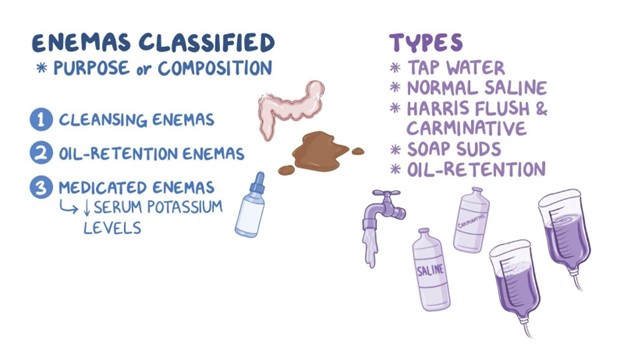
The nurse should warm the solution to body temperature before giving the enema to the adult patient. It is important for the solution to be at a comfortable and safe temperature for the patient to avoid any discomfort or injury. This can be achieved by using a thermometer to ensure the solution is warmed to approximately body temperature, which is around 98.6 degrees Fahrenheit (37 degrees Celsius). Microwaving the solution or using boiling water can lead to temperature extremes that could harm the patient. Cooling the solution to 65 degrees Fahrenheit may be too cool and uncomfortable for the patient. Therefore, warming the solution to body temperature is the most appropriate choice.
In option A, cooling the solution to 65 degrees F (option A) may be too cold and uncomfortable for the patient.
In option B, boiling the solution and letting it cool down (option B) is not necessary and may result in a solution that is too hot and potentially harmful to the patient. Boiling the solution is not recommended, as it can alter the composition of the enema and make it less effective.
In option D, warming the solution in the microwave (option D) is not recommended, as it can lead to uneven heating and potentially create hot spots in the solution. Microwaving enema solutions can also cause the solution to become too hot and pose a risk of injury to the patient.
It is important for the nurse to follow the manufacturer's instructions for preparing the cleansing enema solution, ensuring it is warmed to body temperature to provide optimal patient comfort and safety during the procedure.
Correct Answer is A
Explanation
The faceplate, also known as the wafer or barrier, of an ostomy appliance should typically be changed every 3 to 5 days. This timeframe allows for regular maintenance of the stoma and surrounding skin, ensuring proper hygiene and minimizing the risk of skin irritation or infection. However, it's important to note that individual circumstances may vary, and the frequency of faceplate changes can be adjusted based on the patient's specific needs, the type of ostomy, and the condition of the skin. Regular assessment of the stoma and peristomal skin is essential to determine the optimal timing for faceplate changes.
Whether you are a student looking to ace your exams or a practicing nurse seeking to enhance your expertise , our nursing education contents will empower you with the confidence and competence to make a difference in the lives of patients and become a respected leader in the healthcare field.
Visit Naxlex, invest in your future and unlock endless possibilities with our unparalleled nursing education contents today