
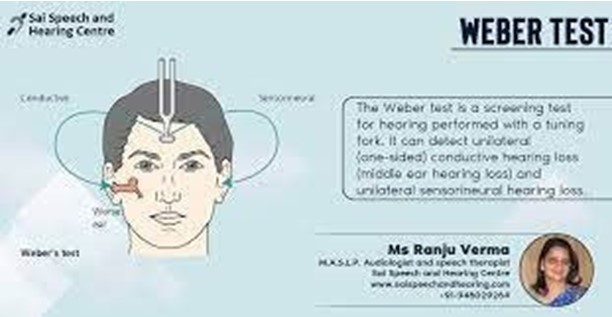
A nurse is testing a client for conduction deafness by performing the Weber's test. Which of the following actions should the nurse take when performing this test?
Place the base of a vibrating tuning fork on the top of the client's head.
Count how many seconds a client can hear a tuning fork after it has been struck.
Place the base of a vibrating tuning fork on the client's mastoid process.
Move a vibrating tuning fork in front of the client's ear canals one after the other.
The Correct Answer is A
The correct answer is that the nurse should place the base of a vibrating tuning fork on the top of the client's head when performing Weber's test. Weber's test is a screening test for hearing that can detect unilateral (one-sided. conductive hearing loss (middle ear hearing loss) and unilateral sensorineural hearing loss (inner ear hearing loss)².
Options b, c and d are not correct actions for performing Weber's test. Counting how many seconds a client can hear a tuning fork after it has been struck, placing the base of a vibrating tuning fork on the client's mastoid process and moving a vibrating tuning fork in front of the client's ear canals one after the other are not part of Weber's test.
Nursing Test Bank
Naxlex Comprehensive Predictor Exams
Related Questions
Correct Answer is B
Explanation
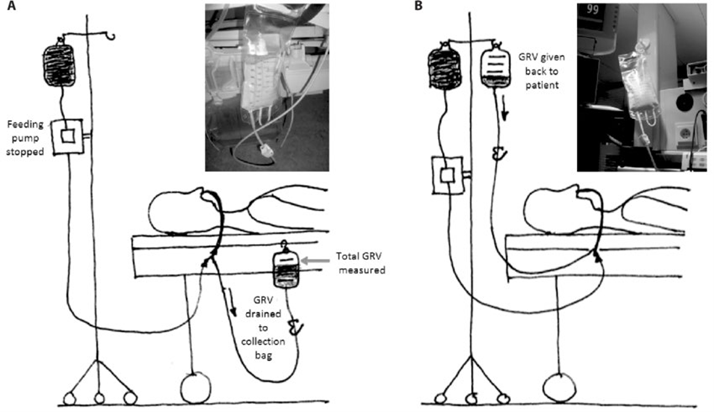
Before administering enteral feedings via an NG tube, the nurse should check for gastric residual volume to ensure that the client is able to tolerate the feeding. If the residual volume is high, it may indicate delayed gastric emptying and the feeding may need to be delayed or the rate adjusted.
a. Encouraging the client to take sips of water may help maintain hydration, but it is not necessary prior to administering enteral feedings.
c. Flushing the tube with sterile 0.9% sodium chloride irrigation can help maintain patency of the tube, but it is not necessary prior to administering enteral feedings.
d. Encouraging the client to breathe deeply and cough can help clear secretions from the lungs, but it is not necessary prior to administering enteral feedings.
Correct Answer is D
Explanation
When caring for a client who has a chest tube following thoracic surgery, the nurse can delegate the task of assisting the client to select food choices from the menu to an assistive personnel. This task is within the scope of practice of an assistive personnel and does not require the specialized knowledge or judgment of a nurse.
Option a is incorrect because monitoring the characteristics of the client's chest tube drainage requires specialized knowledge and should not be delegated.
Option b is incorrect because evaluating the client's response to pain medication requires specialized knowledge and should not be delegated.
Option c is incorrect because teaching deep breathing and coughing to the client requires specialized knowledge and should not be delegated.
Whether you are a student looking to ace your exams or a practicing nurse seeking to enhance your expertise , our nursing education contents will empower you with the confidence and competence to make a difference in the lives of patients and become a respected leader in the healthcare field.
Visit Naxlex, invest in your future and unlock endless possibilities with our unparalleled nursing education contents today