
A nurse is reinforcing nutritional teaching with a client who is at 8 weeks of gestation.
Which of the following statements should the nurse include?
"You should increase your daily calorie intake by 750 calories.".
"You should increase your folic acid intake during your pregnancy.".
"You should limit your iron intake during your first trimester.".
"You should stop taking your prenatal vitamin if you experience nausea.".
The Correct Answer is B
The nurse should include in their teaching that the client should increase their folic acid intake during pregnancy.

Choice A is incorrect because a pregnant woman at 8 weeks of gestation does not need to increase her daily calorie intake by 750 calories.
Choice C is incorrect because a pregnant woman should not limit her iron intake during her first trimester.
Choice D is incorrect because a pregnant woman should not stop taking her prenatal vitamin if she experiences nausea.
Nursing Test Bank
Naxlex Comprehensive Predictor Exams
Related Questions
Correct Answer is C
Explanation
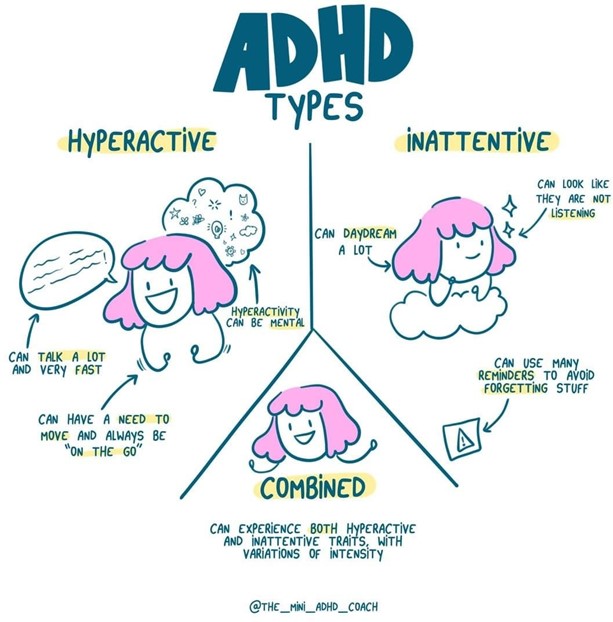
ADHD primarily causes symptoms related to inattention, hyperactivity-impulsivity, or a combination of both.
With ADHD, someone may experience difficulties paying attention and staying organized.
Choice A is not correct because difficulty in acquiring reading skills is not a specific symptom of ADHD.
Choice B is not correct because difficulty using words in context is not a specific symptom of ADHD.
Choice D is not correct because difficulty performing self-grooming activities is not a specific symptom of ADHD.
Correct Answer is B
Explanation
The nurse should teach the patient to report promptly any edema of the face and hands.
Edema of the face and hands can be a sign of preeclampsia, a serious pregnancy complication that can lead to high blood pressure and damage to organs such as the liver and kidneys.
Preeclampsia can be dangerous for both the mother and the baby and requires prompt medical attention.
Choice A is not an answer because nasal congestion is a common symptom during pregnancy and is not considered a danger sign.
Choice C is not an answer because hemorrhoids are also a common symptom during pregnancy and are not considered a danger sign.
Choice D is not an answer because varicose veins are also a common symptom during pregnancy and are not considered a danger sign.
Whether you are a student looking to ace your exams or a practicing nurse seeking to enhance your expertise , our nursing education contents will empower you with the confidence and competence to make a difference in the lives of patients and become a respected leader in the healthcare field.
Visit Naxlex, invest in your future and unlock endless possibilities with our unparalleled nursing education contents today