
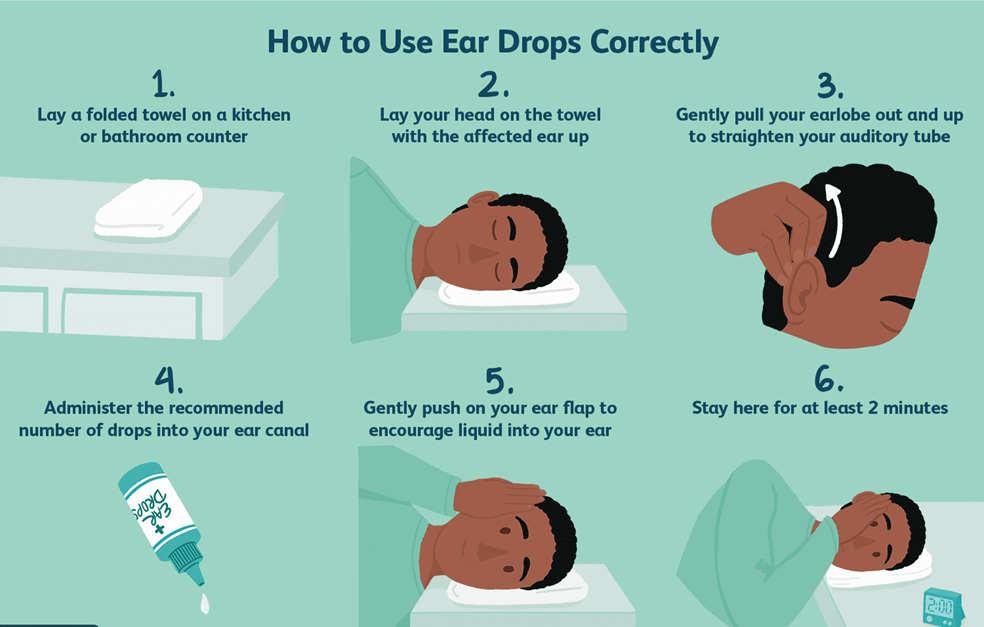
A nurse is preparing to instill an otic medication for an adult client. Which of the following actions should the nurse take?
Cleanse the client's outer ear with isopropyl alcohol to remove wax.
Pull the client's pinna downward and back.
Hold the ear dropper 1 cm (0.5 in) from the client's ear.
Request the client remain supine for 10 min following administration.
The Correct Answer is C
Rationale:
A. Cleansing the client's outer ear with isopropyl alcohol to remove wax is not recommended because it can cause irritation and dryness.
B. Pulling the client's pinna downward and back is an incorrect technique for instilling otic medication in an adult client. An adult ear should be pulled upwards and backwards.
C. Holding the ear dropper 1 cm (0.5 in) from the client's ear is accurate.
D. Requesting the client remain supine for 10 min following administration is not necessary and may not be practical, instead the client should lie on the contralateral side.
Nursing Test Bank
Naxlex Comprehensive Predictor Exams
Related Questions
Correct Answer is ["A","B","C","D"]
Explanation
A. The client has hypertension and high sodium levels, indicating fluid retention, so a diuretic may be prescribed to help manage these conditions.
B. The client reports difficulty sleeping without drinking several beers a night, indicating a potential alcohol problem. Limiting alcohol intake is a common recommendation for clients with this issue.
C. The client has elevated LDL cholesterol, indicating high-fat intake, so limiting fat intake can help manage this.
D. The client has elevated sodium levels, so reducing sodium intake can help manage this.
E. There is no indication for an antibiotic prescription based on the client's symptoms and lab results.
F. There is no indication of high potassium levels, so limiting foods high in potassium is not necessary.
Correct Answer is B
Explanation
Rationale:
A. Drinking an average of 2,000 milliliters of water daily is a healthy habit that promotes bowel elimination.
B. Taking a prescribed opioid pain medication at bedtime can cause constipation and impaired bowel elimination.
C. Eating apples and black-eyed peas is a healthy dietary choice that promotes bowel elimination.
D. Drinking two hot cups of coffee each morning can promote bowel elimination for some individuals.
Whether you are a student looking to ace your exams or a practicing nurse seeking to enhance your expertise , our nursing education contents will empower you with the confidence and competence to make a difference in the lives of patients and become a respected leader in the healthcare field.
Visit Naxlex, invest in your future and unlock endless possibilities with our unparalleled nursing education contents today