
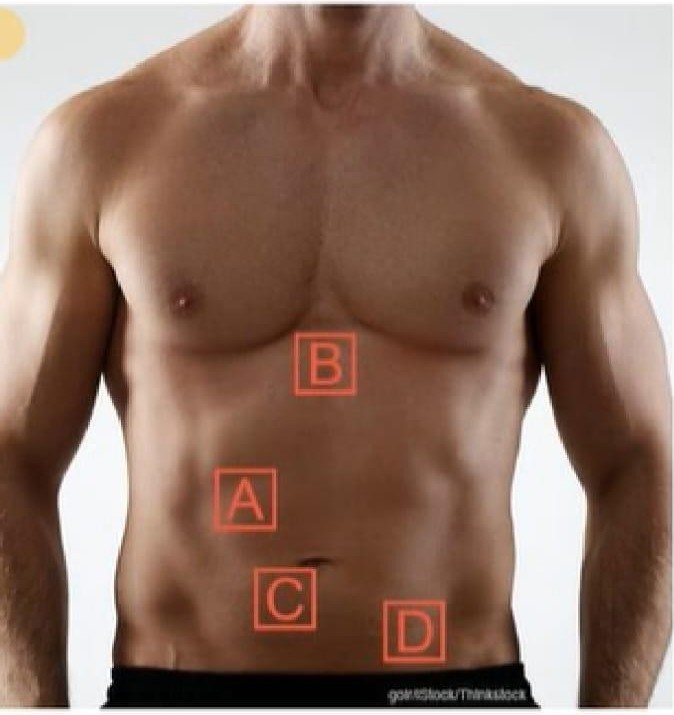
A nurse is planning to complete an incisional dressing change for a client who is postoperative following an open cholecystectomy, in which of the following areas should the nurse expect to find the client's incision? (You will find hot spots to select in the artwork below. Select only the hot spot that corresponds to your answer.)
A
B
C
D
None
None
The Correct Answer is A
A. Right upper quadrant of the abdomen: An open cholecystectomy involves surgical removal of the gallbladder, which is located in the right upper quadrant beneath the liver. The incision is typically made just below the right rib cage, making area A the correct site for the dressing change.
B. Midline of the upper abdomen: This area corresponds to the epigastric region and would not align with the typical location for a gallbladder incision. Incisions here are more common for other abdominal surgeries, such as exploratory laparotomy.
C. Lower midline abdomen: This area is associated with procedures involving the lower gastrointestinal tract, such as appendectomy or hysterectomy, and is not consistent with a cholecystectomy incision.
D. Right lower quadrant: This region is typically related to surgeries involving the appendix, cecum, or right ovary, not the gallbladder. Selecting this area would not correspond to the correct postoperative site for a cholecystectomy.
Nursing Test Bank
Naxlex Comprehensive Predictor Exams
Related Questions
Correct Answer is C
Explanation
A. Massage the lower leg in smooth, long strokes: Massaging the lower leg after knee arthroplasty increases the risk of dislodging a thrombus, especially in the early postoperative period when the client is at high risk for deep vein thrombosis. Mechanical manipulation of the limb should be avoided to reduce embolic risk.
B. Place a pillow under the client's surgical knee: Placing a pillow under the knee promotes flexion and can lead to joint contractures. After knee arthroplasty, the knee should be kept in extension to support proper alignment and prevent stiffness. A pillow may be placed under the calf instead if elevation is needed.
C. Use the continuous passive-motion machine intermittently: Continuous passive-motion machines are used early after knee arthroplasty to improve joint mobility, reduce stiffness, and promote circulation. Intermittent use as prescribed helps maintain range of motion without overfatiguing the joint. This intervention supports functional recovery and rehabilitation.
D. Apply warm, moist packs to the surgical site: Warm packs increase blood flow and may worsen postoperative swelling or bleeding at the surgical site. Cold therapy is preferred in the immediate postoperative period to reduce inflammation, pain, and edema. Warm applications are not appropriate at this stage of recovery.
Correct Answer is D
Explanation
A. Moderate lochia rubra on the pad: Moderate lochia 24 hours postpartum is considered a normal finding as the uterus continues to shed the lining. It typically appears bright red and gradually decreases over the following days, so it does not require immediate reporting.
B. Nipple tenderness with breastfeeding: Nipple tenderness is common in the early postpartum period due to breastfeeding, especially if the latch is not optimal. While it should be addressed to prevent complications, it is not an urgent finding requiring immediate reporting.
C. Hemorrhoids on the rectal area: Hemorrhoids are a frequent postpartum occurrence, often resulting from vaginal delivery or straining during labor. They are uncomfortable but not emergent, so they do not need immediate reporting.
D. Calf edematous and tender: A calf that is swollen, edematous, and tender may indicate a deep vein thrombosis (DVT), which is a potentially life-threatening postpartum complication. This finding requires immediate reporting to the primary RN for timely assessment and intervention.
Whether you are a student looking to ace your exams or a practicing nurse seeking to enhance your expertise , our nursing education contents will empower you with the confidence and competence to make a difference in the lives of patients and become a respected leader in the healthcare field.
Visit Naxlex, invest in your future and unlock endless possibilities with our unparalleled nursing education contents today