
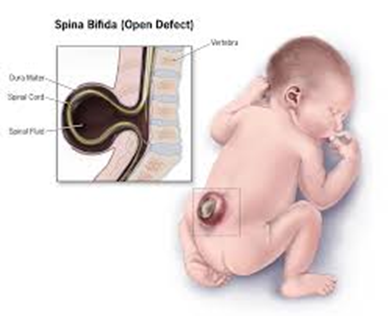
A nurse is planning care immediately following birth for a newborn who has a myelomeningocele that is leaking cerebrospinal fluid. Which of the following actions should the nurse include in the plan of care?
Cleanse the site with povidone-iodine.
Administer broad-spectrum antibiotics.
Prepare for surgical closure after 72 hr.
Monitor the rectal temperature every 4 hr.
The Correct Answer is B
Explanation
Choice A Reason:
Cleaning the site with povidone-iodine may further irritate the exposed neural tissue and is not recommended. Povidone-iodine is a strong antiseptic that can be damaging to delicate tissues.
Choice B Reason:
Administering antibiotics helps prevent infection, which is a significant concern when there is exposure of cerebrospinal fluid due to the open neural tube defect. Infection can lead to meningitis or other serious complications if not promptly treated.
Choice C Reason:
"Prepare for surgical closure after 72 hr," may also be part of the overall plan of care, but immediate administration of antibiotics takes precedence to reduce the risk of infection while the newborn awaits surgical intervention. However, the exact timing of surgical closure may vary depending on the specific clinical circumstances and recommendations from the healthcare provider
Choice D Reason:
Monitoring the rectal temperature is important for assessing the newborn's overall well-being, but it is not the most immediate priority in this situation. The focus should be on preventing infection and protecting the exposed neural tissue.
Nursing Test Bank
Naxlex Comprehensive Predictor Exams
Related Questions
Correct Answer is C
Explanation
Explanation
Choice A Reason:
Vaginal candidiasis is an infection that affects the vagina and does not directly contraindicate the use of a rectal suppository. However, if the suppository is intended for vaginal use, it may not be suitable in the presence of vaginal candidiasis due to the risk of exacerbating the infection.
Choice B Reason:
Afterpains refer to uterine contractions that occur after childbirth as the uterus returns to its normal size. Afterpains are not a contraindication to the use of a rectal suppository for constipation.
Choice C Reason:
Third-degree perineal laceration is correct. A suppository is a medication delivery system that is inserted into the rectum or vagina. In the case of constipation, rectal suppositories are often used to stimulate bowel movements. However, in the presence of a third-degree perineal laceration, the insertion of a rectal suppository could potentially worsen the injury or cause discomfort.
Choice D Reason:
Abdominal distention, or bloating, is a common symptom that may accompany constipation. It is not a contraindication to the use of a rectal suppository for constipation; in fact, relieving constipation may help alleviate abdominal distention.
Correct Answer is B
Explanation
Explanation
Choice A Reason:
"When was the last time you ate meat?" This question is not relevant for a client who adheres to a vegan diet, as they abstain from consuming meat or animal products.
Choice B Reason:
"How much protein do you eat in a day?" Assessing the client's protein intake is essential because protein is a critical component of a healthy diet, especially during pregnancy. Since the client adheres to a vegan diet, obtaining an understanding of their protein intake is particularly important, as plant-based protein sources may require more careful planning to ensure adequate intake. Adequate protein intake is vital for supporting maternal tissue growth, blood volume expansion, and fetal development.
Choice C Reason:
"Are you taking a Vitamin C supplement?" While vitamin C is important, especially for individuals following a vegan diet to aid in the absorption of non-heme iron from plant-based sources, it may not be the primary concern when assessing overall dietary intake. Additionally, vitamin C supplementation may not be necessary if the client consumes a varied diet rich in fruits and vegetables.
Choice D Reason:
"Have you considered eating shellfish?" This question is not appropriate for a client who adheres to a vegan diet, as shellfish are animal products and are not consumed in a vegan diet. Instead, the focus should be on assessing the client's intake of plant-based protein sources.
Whether you are a student looking to ace your exams or a practicing nurse seeking to enhance your expertise , our nursing education contents will empower you with the confidence and competence to make a difference in the lives of patients and become a respected leader in the healthcare field.
Visit Naxlex, invest in your future and unlock endless possibilities with our unparalleled nursing education contents today