
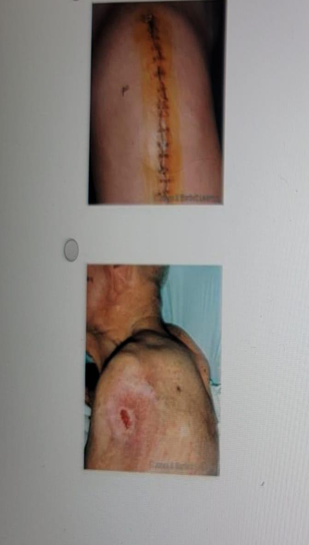
A nurse is performing skin assessments for a group of clients. Which of the following images indicates a wound that is healing by secondary intention?
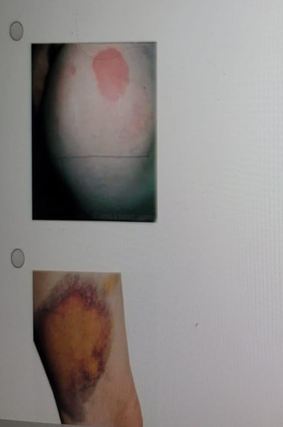
A: Circular Red Area
B: Bruise on Leg
C: Sutured Incision (Primary intention)
D: Open Ulcer/Pressure Injury (Secondary Intention)
The Correct Answer is D
Rationale:
A. Circular Red Area: This is a Stage 1 Pressure Injury (non-blanchable erythema or shallow ulcer).
B. Bruise on Leg: This shows contusion/bruising (ecchymosis) and possible swelling, which is a closed injury, not an open wound that requires healing by intention.
C. Sutured Incision (Primary intention): The wound edges are cleanly approximated (brought together) with sutures, staples, or adhesive. Minimal tissue loss occurred. Healing occurs rapidly, with minimal granulation tissue and minimal scarring. The image showing the clean, surgical incision closed with staples or sutures.
D. Open Ulcer/Pressure Injury (Secondary Intention): The wound has significant tissue loss, irregular borders, and the edges cannot be approximated (closed). The wound is left open to heal by granulation (formation of new connective tissue) from the bottom up. This process is slower and results in a larger, more noticeable scar.
Nursing Test Bank
Naxlex Comprehensive Predictor Exams
Related Questions
Correct Answer is ["B","C","F"]
Explanation
Rationale
A. Ensure the client wears a surgical mask when they are outside of their room: The client has no current respiratory symptoms and no evidence of an active infection requiring droplet or airborne precautions. The previous pneumonia noted in the history is resolved. Standard precautions are therefore adequate at this time.
B. Place the client on contact precautions: The sudden onset of abdominal cramping and multiple loose stools after antibiotic therapy raises concern for possible C. difficile infection. Initiating contact precautions promptly helps prevent the spread of spores, which can contaminate surfaces and infect other clients. Early isolation is critical when diarrhea develops in a client receiving broad-spectrum antibiotics.
C. Clarify the prescription for amoxicillin with the provider: The client’s documented penicillin allergy places them at risk for hypersensitivity reactions when given amoxicillin, a penicillin-class antibiotic. Even if doses have been tolerated so far, the risk of an allergic event remains significant.
D. Hold the dose of levothyroxine: Levothyroxine should be administered consistently to maintain stable thyroid hormone levels, and the client shows no findings indicating the need to withhold it. Vital signs and clinical status do not suggest complications related to thyroid therapy or excess dosing. Disrupting routine thyroid management could worsen metabolic balance.
E. Recommend increasing the dose of metoprolol: Vital signs demonstrate stable blood pressure and heart rate, showing no evidence of inadequate control of hypertension. Increasing the dose without indication could result in hypotension or bradycardia, which may compromise perfusion. No assessment data support changing this medication at this time.
F. Request a prescription for an antiemetic medication: The client continues to experience persistent nausea and has demonstrated reduced dietary intake for several days, which may impair hydration and oral medication tolerance. Addressing nausea helps support nutritional intake and overall recovery.
Correct Answer is A
Explanation
Rationale
A. Telephone number: Using the client’s unique identifiers, such as name and date of birth, is standard practice, but if multiple identifiers are required, asking the client to confirm information like a telephone number helps ensure correct identification. Proper identification prevents errors in assessment, medication administration, and procedures.
B. Diagnosis: A client’s diagnosis does not uniquely identify them because multiple clients may share the same condition. Relying on diagnosis alone could lead to misidentification and errors in care.
C. Provider's name: The healthcare provider’s name is not a reliable client identifier. Multiple clients may be under the care of the same provider, so using this information cannot ensure the correct patient is being assessed.
D. Room number: Room numbers are temporary and can change; several clients may share a room at different times. Using room number alone is insufficient to confirm identity and does not meet safety standards for patient identification.
Whether you are a student looking to ace your exams or a practicing nurse seeking to enhance your expertise , our nursing education contents will empower you with the confidence and competence to make a difference in the lives of patients and become a respected leader in the healthcare field.
Visit Naxlex, invest in your future and unlock endless possibilities with our unparalleled nursing education contents today