
A nurse is obtaining an aerobic wound culture for a client. Which of the following actions should the nurse take first?
Swab the wound bed with a sterile cotton-tipped swab
Cleanse the area around the wound with sterile saline.
Don sterile gloves
Place the collection tube in a specimen bag.
The Correct Answer is B
A. Swabbing the wound bed is necessary to obtain the culture specimen, but it must not be done until after the wound and surrounding area have been cleansed. Swabbing an uncleaned wound will collect superficial skin flora and debris rather than the true pathogens causing the infection.
B. According to evidence-based practice and nursing guidelines for wound care, the nurse must first cleanse the wound and surrounding area with sterile saline (or an approved non-antiseptic cleanser) to remove exudate, topical medications, and normal skin flora. This ensures that the culture specimen reflects the actual microorganisms responsible for the internal wound infection, making it the highest priority first step.
C. Donning sterile gloves is an appropriate action to maintain surgical asepsis during a sterile dressing change or wound culture procedure, but it is not the first action. The nurse typically wears clean gloves to remove the old dressing and cleanse the wound before transitioning to sterile gloves, or performs hand hygiene before preparing the sterile culture kit.
D. Placing the collection tube into a biohazard specimen bag is a necessary final step performed after the specimen has been successfully collected, labeled, and sealed to ensure safe transport to the laboratory, so it cannot be the first action taken.
Nursing Test Bank
Naxlex Comprehensive Predictor Exams
Related Questions
Correct Answer is B
Explanation
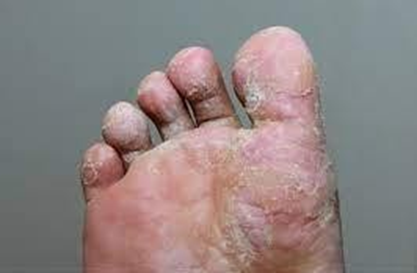
Choice A rationale: Circular, erythematous patches on the scalp are more indicative of tinea capitis, a fungal infection affecting the scalp, and not tinea pedis.
Choice B rationale: Tinea pedis, commonly known as athlete's foot, typically presents with symptoms such as scaling, redness, and itching between the toes. It is a fungal infection affecting the feet.
Choice C rationale: Poison ivy exposure would result in contact dermatitis, characterized by a rash and blistering, rather than the typical presentation of tinea pedis.
Choice D rationale: Antiseizure medications are not typically associated with the development of tinea pedis; the symptoms described are more consistent with a fungal infection.
Correct Answer is B
Explanation
Choice A rationale: While impaired tissue perfusion can affect activity tolerance, addressing the underlying perfusion issue takes precedence.
Choice B rationale: Varicose veins with ulcerations and lower extremity edema suggest impaired tissue perfusion. The compromised blood flow can lead to poor oxygenation and nutrient delivery to tissues, increasing the risk of ulceration and delayed wound healing.
Choice C rationale: Impaired tissue perfusion contributes to impaired skin integrity, but it is not the primary issue.
Choice D rationale: While varicose veins can impact body image, addressing impaired tissue perfusion is more critical for the client's overall well-being.
Whether you are a student looking to ace your exams or a practicing nurse seeking to enhance your expertise , our nursing education contents will empower you with the confidence and competence to make a difference in the lives of patients and become a respected leader in the healthcare field.
Visit Naxlex, invest in your future and unlock endless possibilities with our unparalleled nursing education contents today