
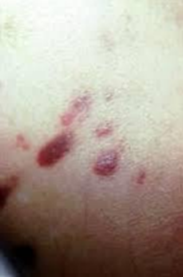
A nurse in a provider's office is assessing a client who has AIDS. The nurse notes that the client has multiple and widespread raised, purplish- brown skin lesions. The nurse should recognize that these findings indicate which of the following conditions?
Kaposi's sarcoma
Basal cell carcinoma
Actinic keratosis
Toxic epidermal necrosis
The Correct Answer is A
The lesions are caused by human herpesvirus 8 and can appear anywhere on the body, but are more common on the face, trunk, and extremities. The other conditions are not associated with AIDS or immunosuppression.
Nursing Test Bank
Naxlex Comprehensive Predictor Exams
Related Questions
Correct Answer is ["A","B","D"]
Explanation
Correct answers: A, B ,D
A.Stress ulcer prophylaxis (e.g., a PPI) is indicated for critically ill, ventilated patients to prevent GI bleeding from stress-related mucosal damage.
B.Rotating the tube and tape from side to side prevents pressure necrosis of the lips and oral mucosa.
D.Semi-Fowler’s positioning (≥30°) reduces aspiration risk and helps prevent ventilator-associated pneumonia.
Correct Answer is ["31.5"]
Explanation
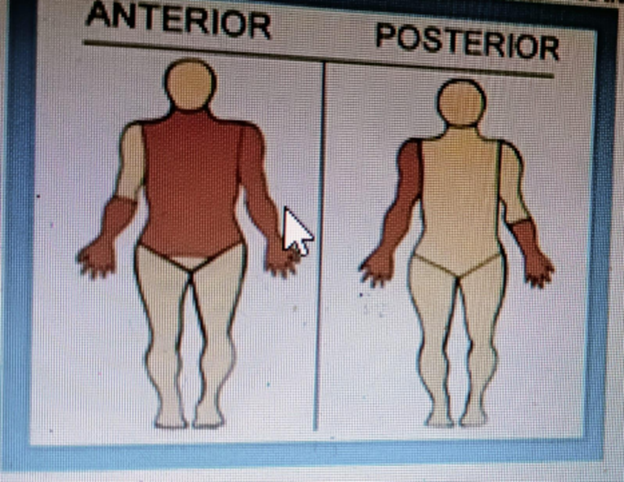
The anterior chest wall and abdomen accounts for 18%, the left upper limb 9 % (4.5% anteriorly and 4.5% posteriorly), and the right upper limb 4.5% (2.25% anteriorly and 2.25% posteriorly).
(18+9+4.5) =31.5%
Whether you are a student looking to ace your exams or a practicing nurse seeking to enhance your expertise , our nursing education contents will empower you with the confidence and competence to make a difference in the lives of patients and become a respected leader in the healthcare field.
Visit Naxlex, invest in your future and unlock endless possibilities with our unparalleled nursing education contents today