
A nurse is giving preoperative instructions to a patient scheduled for surgery. The patient tells the nurse, “I will prepare my advance directives before I come to the hospital.” Which statement shows the client understands advance directives?
I will get my regular doctor to approve my plan before I hand it in to the hospital.
I know they won’t go ahead with the surgery unless I prepare these forms.
I plan to write that I do not want them to keep me on a breathing machine.
I would rather have my brother make decisions for me, but I know he has to be my wife.
The Correct Answer is C
Advance directives are legal documents that allow individuals to outline their preferences for medical treatment in case they become unable to communicate their decisions. These documents typically include a living will and a durable power of attorney for healthcare. The living will specifies the types of medical treatment a person wishes to receive or avoid, while the durable power of attorney for healthcare designates a trusted individual to make healthcare decisions on their behalf.
Choice A Reason:
“I will get my regular doctor to approve my plan before I hand it in to the hospital.”
This statement indicates a misunderstanding of the purpose of advance directives. While it is important to discuss your advance directives with your healthcare provider, the primary purpose of these documents is to communicate your wishes regarding medical treatment, not to seek approval from your doctor. The advance directive is a personal document that reflects your values and preferences for medical care.
Choice B Reason:
“I know they won’t go ahead with the surgery unless I prepare these forms.”
This statement also reflects a misunderstanding. While having advance directives in place is highly recommended, it is not typically a prerequisite for undergoing surgery. Advance directives are important for ensuring that your medical wishes are respected, but they are not mandatory for surgical procedures. The focus should be on making sure your wishes are known and documented, rather than on the necessity of the forms for surgery.
Choice C Reason:
“I plan to write that I do not want them to keep me on a breathing machine.”
This statement correctly reflects the purpose of an advance directive. It shows that the patient understands that they can specify their preferences for medical treatment, such as whether or not they want to be kept on a breathing machine. This type of instruction is a common component of a living will, which is part of an advance directive. It ensures that healthcare providers are aware of the patient’s wishes regarding life-sustaining treatments.
Choice D Reason:
“I would rather have my brother make decisions for me, but I know he has to be my wife.”
This statement is incorrect and confusing. It seems to mix up the roles of different individuals. In an advance directive, you can designate a healthcare proxy or durable power of attorney for healthcare, who can be any trusted person, not necessarily a spouse. The statement also contains a factual error, as it implies that the brother must be the patient’s wife, which is not possible. The correct understanding is that you can choose any trusted individual to make healthcare decisions on your behalf.
Nursing Test Bank
Naxlex Comprehensive Predictor Exams
Related Questions
Correct Answer is A
Explanation
Choice A Reason:
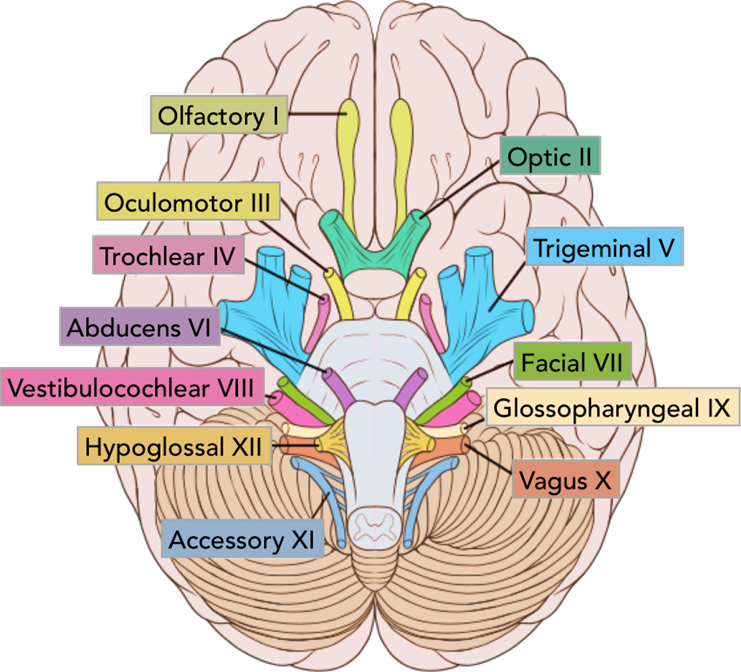
Cranial nerve V is the trigeminal nerve, which has both motor and sensory functions:Motor function: The nurse can assess this by asking the client to clench their teeth while palpating the masseter and temporalis muscles for strength.Sensory function: The nurse can assess this by lightly touching the client's face in different areas (forehead, cheeks, and jaw) with a cotton ball or sharp/dull object to check for sensation.
Choice B Reason:
Asking the client to identify scented aromas is a method used to assess cranial nerve I (Olfactory), not cranial nerve V. Cranial nerve V (Trigeminal) is assessed by testing facial sensation and motor functions such as chewing.
Choice C Reason:
Asking the client to read a Snellen chart is a method used to assess cranial nerve II (Optic), which is responsible for vision. This method does not assess cranial nerve V
Choice D Reason:
Asking the client to raise his eyebrows is a method used to assess cranial nerve VII (Facial), which controls facial expressions. This method is not used to assess cranial nerve V.
Correct Answer is C
Explanation
Choice A reason: While lift pads can help reduce the risk of workplace injuries for staff, such as pulled muscles, this is not their primary purpose. The main goal of using lift pads is to protect the client from injury during repositioning. Lift pads distribute the client’s weight more evenly, making it easier for staff to move them without straining themselves.
Choice B reason: Lift pads are not designed to absorb urinary incontinence or contain stool. There are specific products like incontinence pads and briefs for managing urinary and fecal incontinence. Lift pads are primarily used to assist with the safe repositioning of immobile clients.
Choice C reason: The primary purpose of lift pads is to help prevent friction and shearing when repositioning the client. Friction and shearing can cause skin damage and pressure ulcers, especially in immobile clients. Lift pads reduce the risk of these injuries by allowing smoother and safer movements.
Choice D reason: Lift pads do not prevent clients from being diaphoretic (sweating excessively). Diaphoresis can be managed through other means, such as adjusting room temperature, using fans, or providing appropriate clothing and bedding. Lift pads are not intended for this purpose.
Whether you are a student looking to ace your exams or a practicing nurse seeking to enhance your expertise , our nursing education contents will empower you with the confidence and competence to make a difference in the lives of patients and become a respected leader in the healthcare field.
Visit Naxlex, invest in your future and unlock endless possibilities with our unparalleled nursing education contents today