
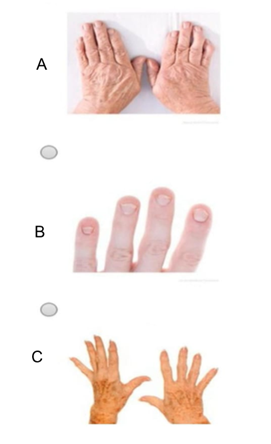
A nurse is collecting data from a group of clients. Which of the following images indicates a client the nurse should identify as exhibiting clubbing of the fingers?
A
B
C
The Correct Answer is B
A. This image shows Heberden's and Bouchard's nodes, which are bony enlargements of the finger joints typically associated with Osteoarthritis.
B. This image clearly shows the loss of the normal angle between the nail and the nail bed (Lovibond angle). The fingertips appear enlarged and "drumstick-like," and the nails have a distinct downward, convex curvature.
C. This image displays Ulnar Drift (the fingers slanting toward the pinky side) and joint swelling, which are classic manifestations of Rheumatoid Arthritis. It also shows age-related lentigines (liver spots) on the skin.
Nursing Test Bank
Naxlex Comprehensive Predictor Exams
Related Questions
Correct Answer is D
Explanation
A. Pain rating of 4 on a scale of 0 to 10: Mild to moderate pain is expected in the early postoperative period due to surgical trauma. While pain should be monitored, a rating of 4 is not specific for infection and can be considered within normal postoperative discomfort.
B. Temperature of 37.2° C (99.0°F): A slightly elevated temperature within the normal range is common after surgery due to inflammatory response. It does not necessarily indicate infection unless it continues to rise or is accompanied by other systemic signs.
C. Increased urinary output: Increased urine output is generally a positive sign of adequate renal perfusion and fluid balance. It is not indicative of infection and may instead reflect normal postoperative recovery or fluid administration.
D. Elevated WBC count: Leukocytosis is a key laboratory indicator of infection. An elevated white blood cell count suggests an inflammatory or infectious process, which is particularly concerning in the postoperative period and warrants further assessment and intervention.
Correct Answer is A
Explanation
A. “When I sign the consent form, I am stating that the client appears to be competent to give consent.”: The nurse’s role in informed consent is to witness the client’s signature and verify that the client appears competent and is signing voluntarily. This demonstrates proper understanding of the nurse’s legal responsibility in the consent process.
B. “I will sign the consent form to indicate that the client has received written materials explaining the procedure.”: Providing written materials and explaining the procedure is the responsibility of the healthcare provider performing the procedure. The nurse does not sign the consent to verify that teaching has occurred.
C. “I will provide the client with an explanation of the procedure before I sign the consent form.”: Explaining the procedure, including risks and benefits, must be done by the provider who will perform it. The nurse may reinforce information but does not provide the primary explanation for consent.
D. “It is my responsibility to obtain informed consent from the client prior to the procedure.”: Obtaining informed consent is the legal responsibility of the provider performing the procedure. The nurse supports the process by witnessing the signature and ensuring consent is given voluntarily.
Whether you are a student looking to ace your exams or a practicing nurse seeking to enhance your expertise , our nursing education contents will empower you with the confidence and competence to make a difference in the lives of patients and become a respected leader in the healthcare field.
Visit Naxlex, invest in your future and unlock endless possibilities with our unparalleled nursing education contents today