
A nurse is caring for a school-age child who has appendicitis. For which of the following findings should the nurse monitor as a manifestation of a perforated appendix and report to the provider?
Elevated temperature
Lethargy
Decreased abdominal girth
Bradycardia
The Correct Answer is A
A nurse caring for a school-age child who has appendicitis should monitor for several manifestations of a perforated appendix and report to the provider. According to my sources, one of the major complications of appendicitis is the perforation of the appendix, which can lead to peritonitis, abscess formation, or portal pylephlebitis. Perforation generally occurs 24 hours after the onset of pain. Symptoms include a fever of 37.7⁰C or greater, a toxic appearance, and continued abdominal pain or tenderness.
B- Lethargy is not mentioned as a manifestation of a perforated appendix.
C- Decreased abdominal girth is not mentioned as a manifestation of a perforated appendix.
D- Bradycardia, which refers to a slower than normal heart rate, is also not mentioned as a manifestation of a perforated appendix.
Nursing Test Bank
Naxlex Comprehensive Predictor Exams
Related Questions
Correct Answer is A
Explanation
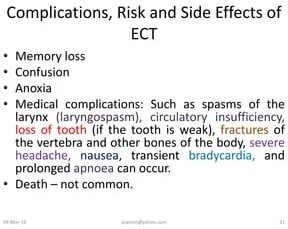
ECT can cause temporary memory loss, particularly for events occurring around the time of the treatment. The client may experience difficulty remembering details of recent events or conversations. This effect is usually temporary and improves over time.
B. Neck pain is not a typical adverse reaction to ECT. The procedure itself does not involve manipulation or strain on the neck, and significant neck pain following ECT would be unusual. However, it is essential for the nurse to assess and address any discomfort or pain the client experiences after the procedure.
C. Voice alteration is not a known adverse reaction to ECT. ECT primarily affects the brain and does not directly impact the vocal cords or voice production.
D. Tingling of the scalp is not a common adverse reaction to ECT. During the procedure, the client receives a brief electrical stimulus, usually applied through electrodes placed on the scalp.
Sensations experienced during the procedure are typically related to the electrical stimulation and are transient.
Correct Answer is C
Explanation
Overhearing a discussion about a client's private information is a breach of confidentiality, and it is the nurse's responsibility to address the situation promptly.
While documenting the event in the client's progress notes might be necessary in some cases, it is not the initial action to take in this scenario. Similarly, submitting an incident report to the risk manager may be required for documentation purposes, but it is not the immediate action to address the breach of confidentiality.
Informing the client of the APs' actions may not be necessary unless there is evidence that the client's privacy has been compromised or if the client specifically requests to know. However, the priority is to address the issue of the conversation between the APs and ensure that confidentiality is maintained.
Whether you are a student looking to ace your exams or a practicing nurse seeking to enhance your expertise , our nursing education contents will empower you with the confidence and competence to make a difference in the lives of patients and become a respected leader in the healthcare field.
Visit Naxlex, invest in your future and unlock endless possibilities with our unparalleled nursing education contents today