
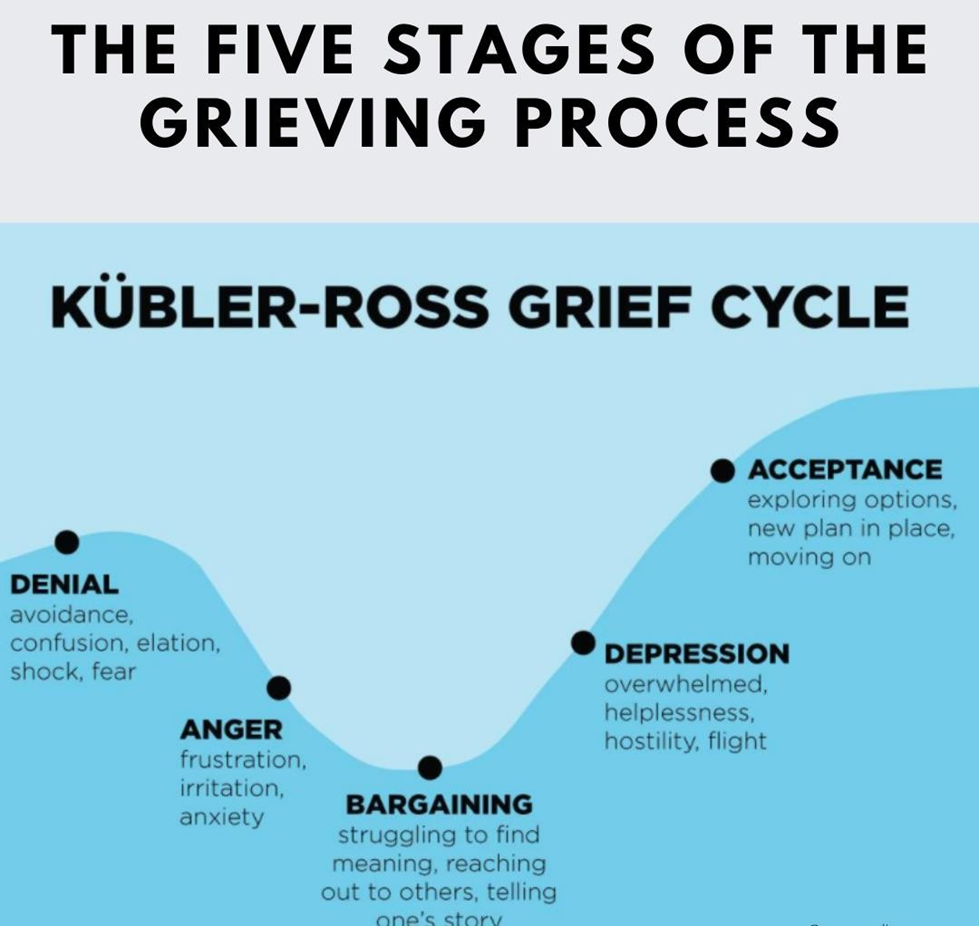
A nurse is caring for a client who was recently diagnosed with a terminal illness. The client tells the nurse, "I am looking forward to seeing my grandchildren grow up." The nurse should identify that the client is experiencing which of the following stages of grief?
Denial
Bargaining
Acceptance
Anger
The Correct Answer is A
A. Denial is the first stage of grief, in which the person refuses to accept the reality of their situation and tries to maintain a sense of normalcy. The client who says they are looking forward to seeing their grandchildren grow up is denying the fact that they have a terminal illness and that they may not live long enough to witness that.
B. Bargaining involves making deals with self and God to help feel better, for instance, in this case the client will be expressing the will to do anything to prolong his life.
C. Acceptance involves coming to terms with the reality of the situation and preparing for death. The client's statement does not indicate full acceptance.
D. Anger involves feelings of resentment or frustration. The client's statement does not express anger towards their situation.
Nursing Test Bank
Naxlex Comprehensive Predictor Exams
Related Questions
Correct Answer is B
Explanation
A. While it may be necessary to notify risk management eventually, the immediate priority is to ensure the client's safety and well-being.
B. The nurse should promptly assess the client for signs and symptoms of an allergic reaction and initiate appropriate interventions as necessary.
C. Documentation of the medication error and allergic reaction should be completed after ensuring the client's immediate needs are addressed.
D. Administering an antidote may be appropriate in certain situations, but the nurse should first assess the client's condition and follow established protocols for managing allergic reactions.
Correct Answer is D
Explanation
A. With the Z-track method, the skin is pulled laterally or to the side before the needle is inserted and released after the injection is administered to ensure the medication remains within the muscle and does not leak into the subcutaneous tissue.
B. The angle of insertion for intramuscular injections can vary depending on factors such as the client's body habitus and the length of the needle but is typically 90 degrees.
C. The needle should be withdrawn slowly and steadily to minimize tissue trauma and prevent medication leakage.
D. The Z-track method involves pulling the skin laterally or to the side before inserting the needle to create a zigzag pathway for the medication. This helps seal the needle track after the injection, reducing the risk of medication leakage into subcutaneous tissues.

Whether you are a student looking to ace your exams or a practicing nurse seeking to enhance your expertise , our nursing education contents will empower you with the confidence and competence to make a difference in the lives of patients and become a respected leader in the healthcare field.
Visit Naxlex, invest in your future and unlock endless possibilities with our unparalleled nursing education contents today